Top Indoor Flooring Options for Athletic Facilities
KeystoneSportsConstruction |
January 3, 2026
Choosing the right flooring for an indoor athletic facility is one of the most critical decisions a facility manager or owner will face. The surface is the foundation of every practice, game, and workout, directly impacting athlete performance, safety, and the facility’s long-term durability and maintenance costs.
For over a decade, Keystone Sports Construction has specialized in designing and installing high-performance indoor sports surfaces. We understand that there is no one-size-fits-all solution; the perfect floor depends on the primary sports played, the level of competition, the budget, and whether the space is truly multi-purpose. Reach out to our team if you need hardwood sports flooring in MD.
The Gold Standard: Athletic Hardwood Flooring
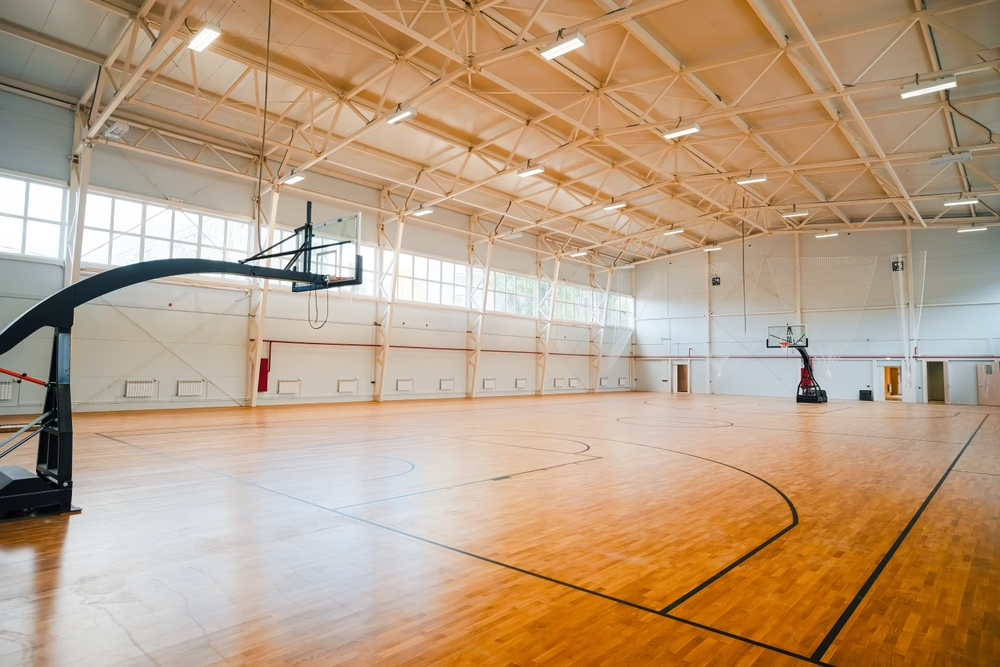
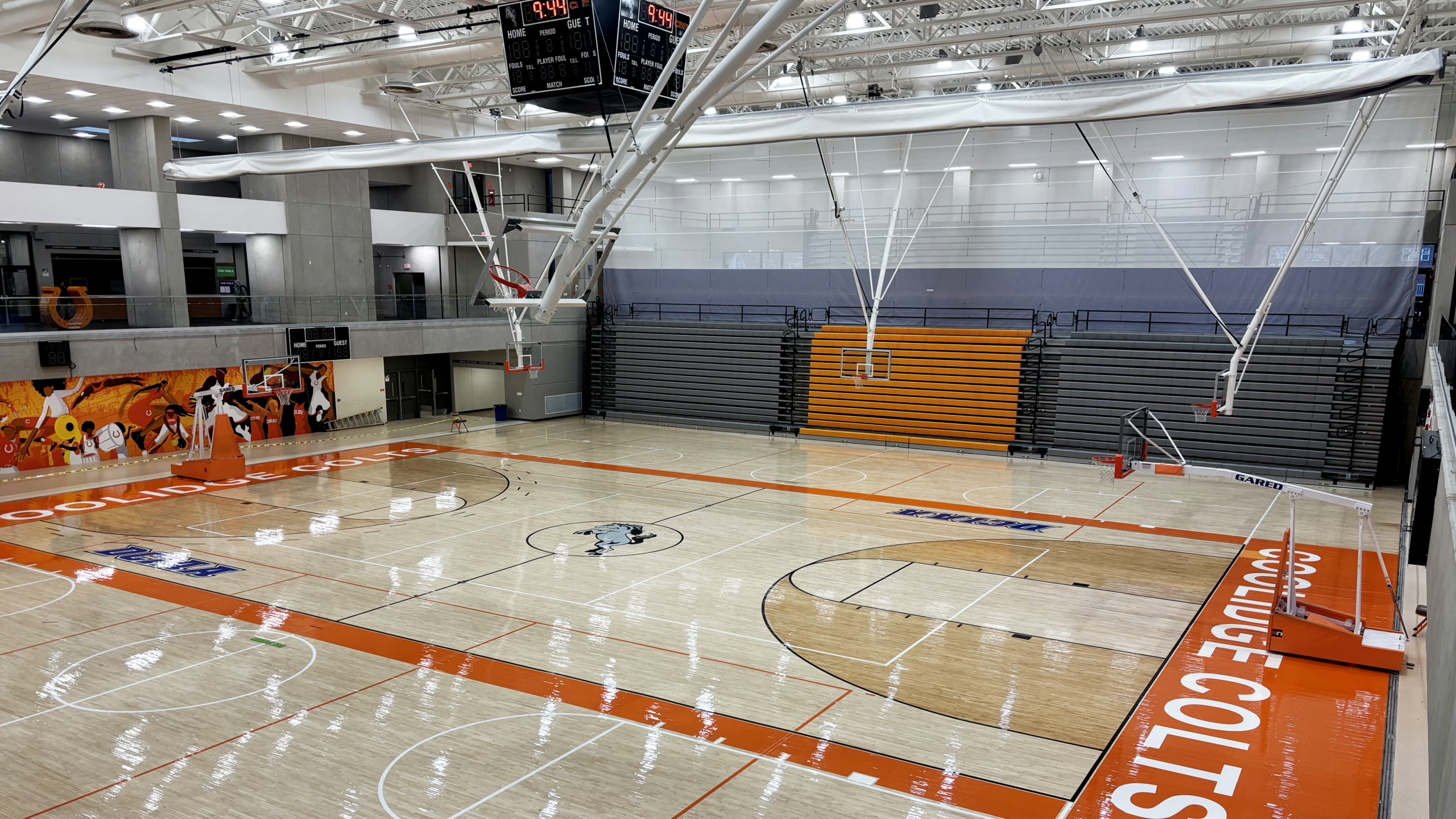
When you picture a classic gymnasium or basketball court, you are likely picturing an athletic hardwood floor. For sports requiring precise ball bounce and a traditional aesthetic, hardwood remains the undisputed champion.
Key Features and Benefits:
Optimal Ball Performance: Hard maple is prized for its resilience and ability to provide a consistent, true ball bounce, essential for competitive basketball and volleyball.
Aesthetic Appeal: The timeless look of a well-maintained maple court brings an unmatched level of professionalism and prestige to any facility.
Athlete Safety and Comfort: Hardwood systems are often installed over a specialized subfloor system (sometimes called a sprung floor). This construction provides area-elastic shock absorption, minimizing impact on athletes’ joints and reducing fatigue during long training sessions.
Longevity: While requiring periodic maintenance like screen and coat, a high-quality hardwood system can be sanded and refinished multiple times, potentially lasting for decades.
Ideal Use Cases:
Competitive Basketball and Volleyball courts.
High-end school and university gymnasiums.
Any facility where the prestige and performance of a classic wood court are paramount.
Considerations:
Hardwood requires careful moisture control and consistent maintenance. It is also more susceptible to damage from dropped weights, bleacher movement, or spills than synthetic options.
The Versatile Workhorse: Rubber Flooring Systems
Rubber flooring is the go-to choice for facilities focused on high-impact training, functional fitness, and weightlifting. Its exceptional durability and protective qualities make it a versatile workhorse for multipurpose spaces beyond the main court.
Key Features and Benefits:
Superior Shock Absorption: High-density rubber provides a thick cushion, which is crucial for absorbing the impact of dropped weights, protecting the subfloor, and reducing equipment damage. This also significantly lowers noise and vibration.
Injury Prevention: The inherent resilience and non-slip properties of rubber flooring reduce the risk of slips, falls, and joint stress during intense workouts, such as Crossfit or plyometrics.
Extreme Durability: Rubber is exceptionally resistant to cuts, abrasions, moisture, and heavy traffic, giving it a long life in the most demanding areas of a fitness center.
Easy Maintenance: It’s simple to clean and requires minimal ongoing maintenance, making it a cost-effective choice in the long run. Rubber is commonly available in rolls or interlocking tiles, allowing for flexible installation and easy replacement of damaged sections.
Ideal Use Cases:
Weight rooms and free-weight areas.
Fitness centers and cardio zones.
High-impact functional training and Crossfit facilities.
Locker rooms and auxiliary gyms.
Considerations:
While rubber offers excellent protection, the level of thickness is critical. Thicker options are needed for heavy Olympic-style lifting, while thinner rolls may suffice for general fitness and cardio.
Where the Turf Meets the Tread: Indoor Synthetic Turf
For athletes needing to replicate the feel of outdoor play indoors, synthetic turf is the optimal choice. Modern indoor turf is specifically designed to handle high-intensity training, agility drills, and sport-specific practice.
Key Features and Benefits:
Simulated Outdoor Surface: Indoor turf provides a surface ideal for speed, agility, and resistance training like sled pushes, sprints, and football or soccer drills.
High-Intensity Training: The soft, forgiving nature of the turf is great for ground-based activities and high-rep exercises, reducing skin abrasions compared to hard surfaces.
Customization: Turf can be seamlessly installed with permanent agility lines, custom logos, and number markings, creating a highly specific and branded training zone.
Excellent Drainage and Cushioning: Non-infilled turf systems, often installed with a high-density foam padding underlayment, provide critical shock absorption while maintaining a smooth, fast surface.
Ideal Use Cases:
Indoor baseball/softball batting cages and pitching areas.
Soccer and Field Hockey practice areas.
Speed and agility training zones.
Multi-sport indoor field houses.
Considerations:
Indoor turf is best suited for non-court sports. It is not designed to support competitive basketball or volleyball, but it is an indispensable addition to a true multi-purpose athletic complex.
The Flexible Solution: Resilient Synthetic Flooring
Resilient synthetic flooring refers to a wide range of materials, including cushioned vinyl sports flooring and seamless polyurethane (PU) systems. These options are perfect for multi-purpose rooms and facilities that host diverse activities, from gym class to community events.
Key Features and Benefits:
Multi-Sport Versatility: These surfaces offer a controlled level of shock absorption, making them suitable for a wide array of activities including badminton, futsal, aerobics, and general physical education.
Water and Stain Resistance: Unlike hardwood, resilient synthetic floors are inherently resistant to moisture, making them an excellent choice for areas prone to spills, like multi-use school cafeterias or activity rooms.
Design Flexibility: Vinyl comes in a vast array of colors and patterns, including options that convincingly mimic hardwood, offering a high-performance floor with superior durability and lower maintenance requirements than real wood.
Seamless and Hygienic (PU): Seamless polyurethane systems eliminate joints and crevices, which prevents dirt and moisture accumulation, making them highly hygienic and exceptionally easy to maintain.
Ideal Use Cases:
Multi-purpose school gymnasiums and halls.
Aerobics and fitness studios.
Badminton and Pickleball courts.
Training facilities needing an economical, durable court surface.
Considerations:
While highly durable, synthetic options will not provide the same elite ball bounce as a traditional maple court for high-level competitive basketball. They do, however, offer superior acoustic properties and can withstand non-athletic point loads (like tables and chairs) better than hardwood.
Natural Grass Feel, Traction for Explosive Movement
High Durability, Low Maintenance
Indoor Field Houses, Performance Training Zones
Resilient Synthetic
Multi-Sport, General Fitness
Versatile Shock Absorption, Moisture Resistant
Excellent Durability, Very Low Maintenance
Multi-Purpose School Gyms, Aerobics Studios
Your Next Play: Making the Right Flooring Investment
Selecting your athletic facility’s flooring is a significant, long-term investment that should prioritize athlete safety, performance, and the cost-effective longevity of your space. The right material will minimize injuries, maximize the facility’s lifespan, and enhance the overall experience for every user.We even offer other options like track floor installation in MD. At Keystone Sports Construction, our team of experts understands the critical details from the perfect subfloor system for maple to the right rubber thickness for your weight room. We don’t just sell floors; we design high-performance athletic environments.
Related Posts
February 12, 2026
Protecting Your Investment: Moisture Mitigation Strategies for Concrete Slabs Under Gym Floors