Coating Systems for Hard Courts: Longevity and UV Resistance
Read More
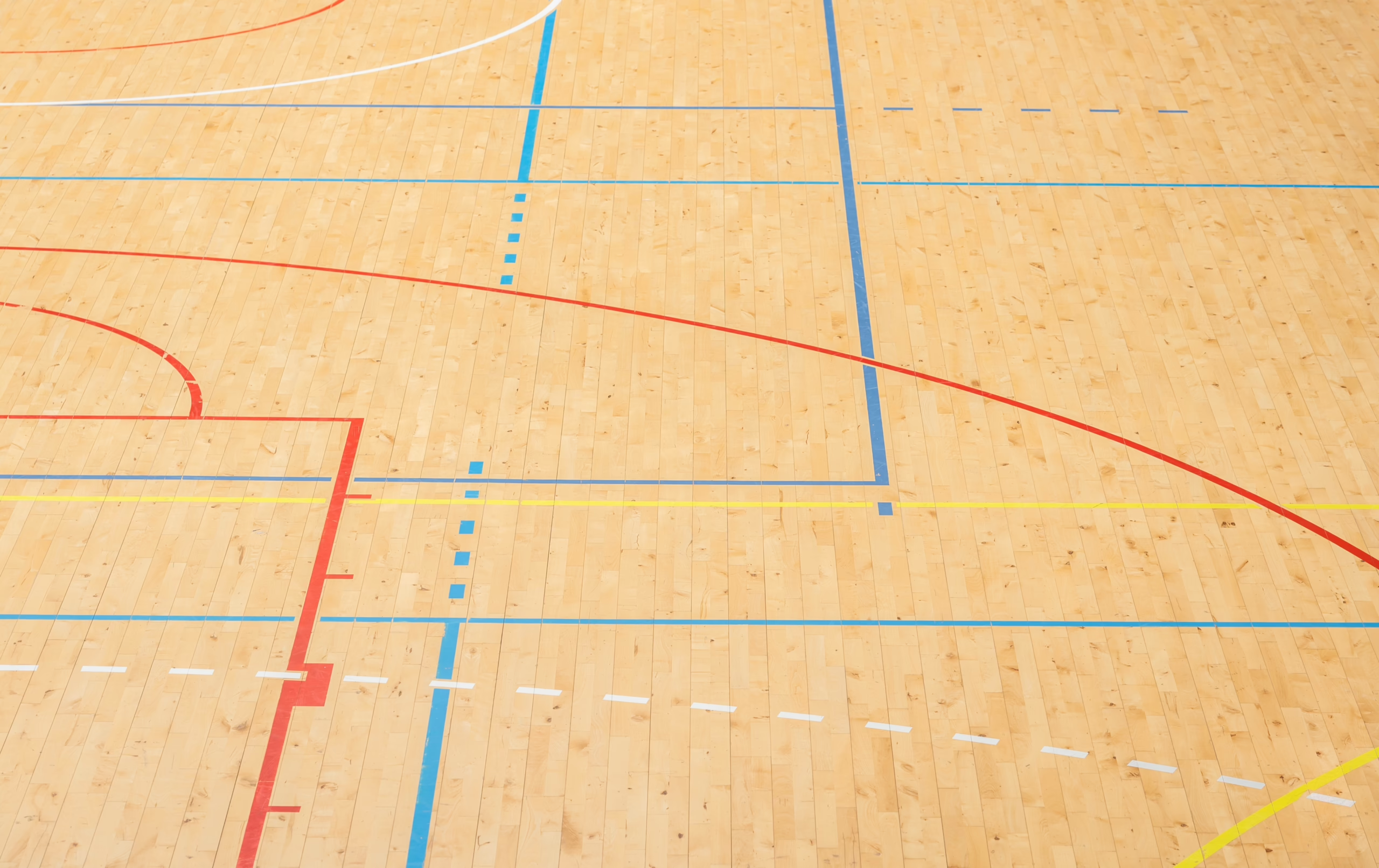
The squeak of sneakers, the bounce of a perfectly weighted ball, the roar of the crowd—it all happens on a gym floor. For schools, community centers, and athletic facilities looking to upgrade or build new sports spaces, the terms gym floor construction and gym floor installation often get used interchangeably.
However, these terms represent two distinct phases of a complex, highly specialized process. Understanding the difference isn’t just about semantics; it’s about making informed decisions that impact the longevity, performance, and safety of your athletic investment. Our team delivers high quality athletic hardwood flooring in PA and more construction options.
While both construction and installation are critical to the final product, they cover different responsibilities and stages of a project. Think of it like building a custom home: construction is building the foundation, framing the walls, and making sure the structure is sound, while installation is laying the specific type of flooring, painting the walls, and placing the fixtures.
Gym floor construction refers to the comprehensive initial work required to prepare a space for the specialized flooring system. This phase is less about the finished wood or synthetic surface you see, and more about the substructure, the critical elements underneath that support the entire system.
This stage is often the most demanding in terms of engineering, grading, and moisture management. The construction phase is about creating a perfectly level, dry, and stable base that will prevent future failures.
Gym floor installation is the highly specialized process of laying the finished surface, the material the athletes actually play on. This phase requires meticulous craftsmanship, precision measuring, and an in-depth understanding of the specific materials being used, whether it’s northern maple hardwood or advanced synthetic sports flooring.
For a facility manager, athletic director, or school board, recognizing the difference between construction and installation is vital for several reasons:
Construction and installation require different skill sets, materials, and timelines. The construction phase often uncovers unforeseen issues, such as high moisture levels or damaged concrete, which require specific budget allocations for remediation. Grouping these distinct costs allows for more accurate bidding and prevents costly surprises later. Keystone Sports Construction specializes in site assessment to accurately scope both phases from the start.
The performance and safety of the floor are determined by the quality of the work done in both phases.
A gym floor is a long-term investment. The lifespan of the floor, which can range from 40 to 60 years for a hardwood system, is fundamentally tied to the quality of the construction phase. Failures in moisture mitigation or subfloor leveling will inevitably lead to expensive, premature failure of the installed surface. By separating the phases, reputable builders like Keystone Sports Construction can provide clear warranties covering the structural integrity (construction) and the surface materials/finish (installation).
At Keystone Sports Construction, we understand that a gymnasium floor is more than just wood and paint; it’s the heart of a community and a platform for athletic achievement. We don’t just install floors; we construct high-performance athletic environments from the concrete up. Call us for your next repair or installation of hardwood sports flooring in NJ.
Our specialized approach means we manage the entire project from the initial moisture testing and slab leveling (construction) to the precise milling, finishing, and game line painting (installation). This full-spectrum expertise guarantees seamless transitions between phases, accountability for the entire system, and a final product that meets the most rigorous standards for safety and competitive play.
 July 31, 2026
 June 16, 2026
 February 12, 2026