Choosing the Right Base and Foundation for Every Athletic Surface
Read More
When planning a new athletic facility, whether it is a high school football stadium, a community tennis complex, or a premier indoor soccer arena, the initial budget is usually the biggest hurdle. It is entirely natural for project managers, school boards, and town councils to look at a line-item budget and ask: “Where can we trim the fat?”
Often, the easiest target seems to be material costs. Opting for a lesser-known turf brand, a thinner sub-base, or budget-grade court surfacing can instantly shave tens of thousands of dollars off the initial bid.
But in the world of sports facility construction, there is a brutal truth that seasoned athletic directors and facility managers know all too well: you either pay now, or you pay much more later. Choosing cheap materials does not actually save money; it merely delays the expense, compounding it with interest in the form of premature failures, safety hazards, and lost revenue. At Keystone Sports Construction, we believe in building spaces that last. Let’s pull back the curtain on the true, hidden costs of cutting corners on materials.
The most immediate casualty of cheap materials is longevity. High-quality sports surfaces are engineered to withstand extreme weather, UV radiation, and thousands of hours of heavy foot traffic. Bargain-bin materials simply lack the structural integrity to endure this kind of punishment.
A sports field is only as good as what lies beneath it. Cheap construction on turf maintenance in NY often cuts corners on the aggregate sub-base and drainage systems.
Low-grade synthetic turf often utilizes inferior polymers that lack proper UV stabilizers.
On running tracks and tennis courts, cheap acrylics and binders cure poorly and lack flexibility.
When a contractor pitches a cheap material option, they rarely show you the maintenance schedule required to keep it functional. High-quality materials are designed to be resilient and low-maintenance; cheap materials require constant life support.
Here is how budget choices multiply your long-term maintenance needs:
When you add up the labor hours, specialized equipment rentals, and repair materials needed to keep a low-cost facility operational, the savings from day one vanish into thin air by year three.
While financial metrics are easy to track on a spreadsheet, the most devastating cost of cheap materials is one you cannot put a price tag on: athlete safety.
A field’s shock absorption is measured by its G-max rating. High-quality turf systems use premium infill and specialized shock pads to absorb impact energy, protecting an athlete’s head and joints. Cheap turf systems, or fields where the infill compacts into a brick-like layer, lose their shock absorption rapidly. High G-max ratings are directly correlated with increased concussion rates and lower-extremity joint injuries.
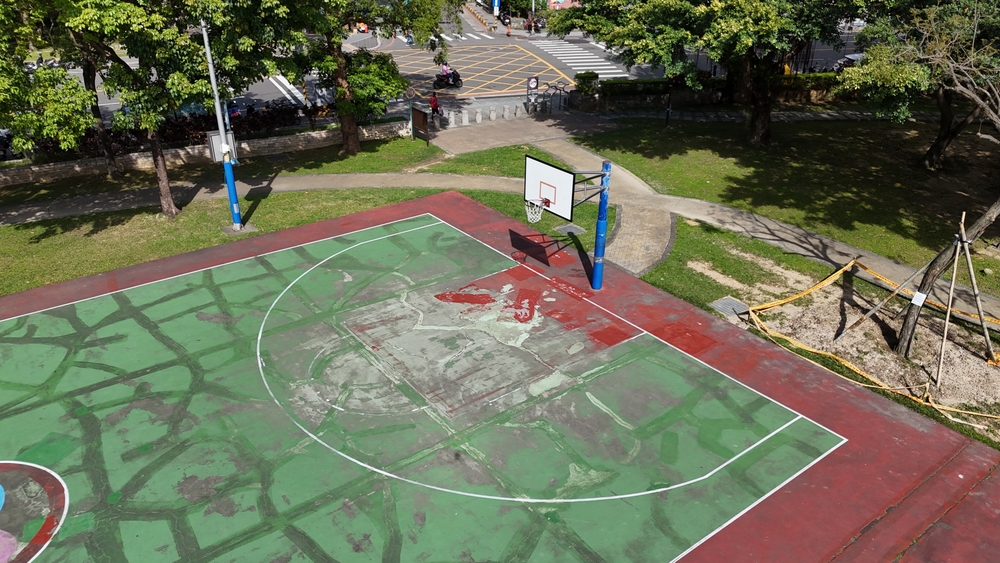
Inferior court coatings or track surfaces can become incredibly slick when wet, or conversely, overly abrasive. A basketball player making a sharp cut on a cheap court coating is at a much higher risk for ACL tears due to unpredictable surface friction. Similarly, low-grade turf fibers act like sandpaper, causing severe turf burn and skin infections like MRSA.
If an athlete is injured due to documented poor field maintenance or substandard building materials, the facility owner can face massive legal liability. A single personal injury lawsuit can cost vastly more than the price of a premium, professionally installed sports surface.
For commercial sports complexes, community centers, and universities, an athletic facility is a revenue generator. When the facility is closed for repairs, the money stops flowing.
Imagine a community sports complex that hosts weekend tournament leagues. If cheap turf seams split or the drainage system fails after a storm, games must be canceled.
When a facility is built with premium materials by an expert team, it stays open. It drains quickly after a downpour, resists damage during high-intensity tournaments, and maximizes your operational days per year.
At Keystone Sports Construction, we understand that budgets are real constraints. However, there is a massive difference between Value Engineering and Cutting Corners.
The old adage rings incredibly true in sports construction: “Buy nice, or buy twice.” When you partner with Keystone Sports Construction, we help you navigate the budget process transparently. We do not sacrifice the quality of our turf, the depth of our sub-bases, or the caliber of our acrylic coatings because we know that our reputation, alongside your long-term financial health, rides on the performance of that surface.
Investing in premium materials guarantees a safer environment for athletes, drastically reduces your annual maintenance headaches, and provides a facility that your community or organization can be proud of for a decade or more.
Before you accept the lowest bid on your upcoming sports facility project, let’s talk about how we can build a durable, high-performing space that fits your budget without compromising your future. Contact Keystone Sports Construction today for a clear, professional consultation.