Why Fall is the Prime Season for Running Track Installation & Resurfacing
Read More
Water can definitely be the bane of an athletic facility, as Keystone Sports Construction has witnessed. Without a properly functioning drainage system, no amount of money spent on a quality artificial turf will stand the test of time. It is imperative that one has knowledge of how the drainage process works in an athletic facility.
In terms of outdoor sports surfaces, water is one of the major sources of structural defects. This is not only because it makes the surface slippery during events. The danger lies in water seepage that can happen once the surface gets wet.
It goes without saying that having water present on the surface will make the area slippery and training sessions may be cancelled as a result. But more importantly, water penetration into lower layers of material can cause serious problems in those locations where temperatures change seasonally. Water will freeze inside and expand pushing asphalt and rubber layers apart, creating bubbles and cracks in the process.
To appreciate drainage, you have to look at the track as a multi-layered sandwich.
A truly effective system manages water in two distinct ways: on top and underneath.
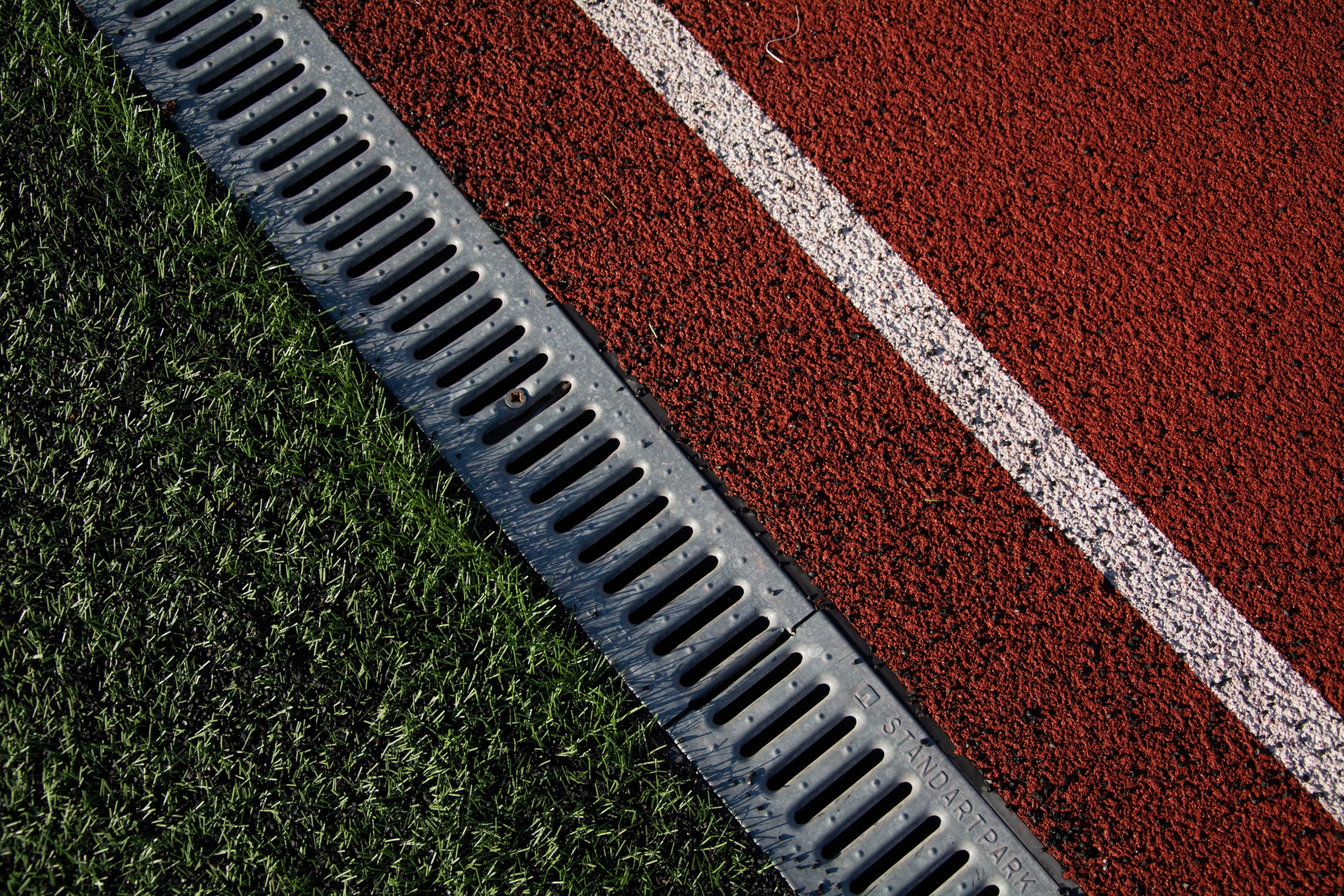
The most visible part of a track’s drainage is the trench drain, often running along the inside curb of the track. These are long, narrow channels covered by a grate. We emphasize the quality of these drains because they are the primary exit point for heavy rainfall.
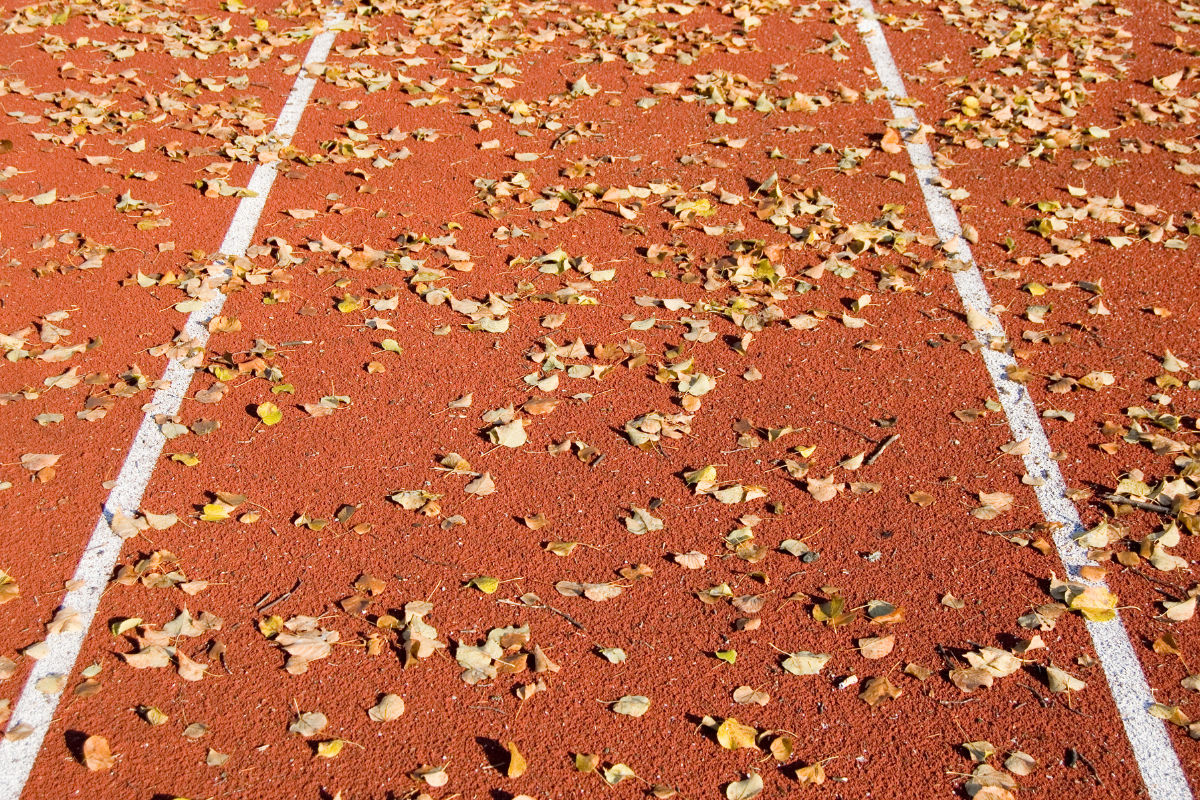
If these channels get clogged with debris, leaves, or silt, water backs up onto the track lanes. This doesn’t just stop the race; it starts the process of water seeping into the edges of the track material, which is where many tracks start to peel first. Resolve these issues with running track construction in PA from Keystone Sports Construction.
You cannot fix poor drainage with more rubber or better paint. Proper drainage starts during the excavation phase. We use laser-grading technology to make sure the sub-base and the asphalt meet exact specifications.
If there is even a slight “birdbath” (a low spot) in the asphalt base, water will collect there. Over time, that standing water will rot the binder in the rubber surface. By the time you see a dark spot or a soft patch on the track, the damage underneath is already done. Getting the slope right at the dirt and stone level is the only way to prevent these issues.
It might seem like a hidden cost to put in a high-quality drainage system during construction, but it’s the best thing a facility can do for its money.
Modern drainage isn’t just about getting water off the track; it’s about where that water goes. High-end systems often include silt traps and basins that catch debris before the water enters the local municipality’s storm system. This helps schools and municipalities stay in compliance with environmental regulations regarding runoff and erosion.
If you are managing an existing facility, there are a few red flags that indicate your drainage system isn’t pulling its weight:
Building a running track is a massive undertaking. It’s easy to focus on the color of the lanes or the logo in the middle of the field, but the real success of the project is determined by what happens when the clouds open up.
At Keystone Sports Construction, we don’t cut corners on what’s underneath. We know that a track is only as good as its foundation. By prioritizing a drainage strategy in our running track installation in MD, from the initial soil stabilization to the final installation of the trench grates, we help our clients build facilities that stand the test of time, weather, and heavy use.
When you’re ready to break ground, remember: the most important part of the track is the part you’ll never see, working hard beneath your feet to keep the surface fast, dry, and ready for the next lap. Contact Keystone Sports Construction for an estimate today!