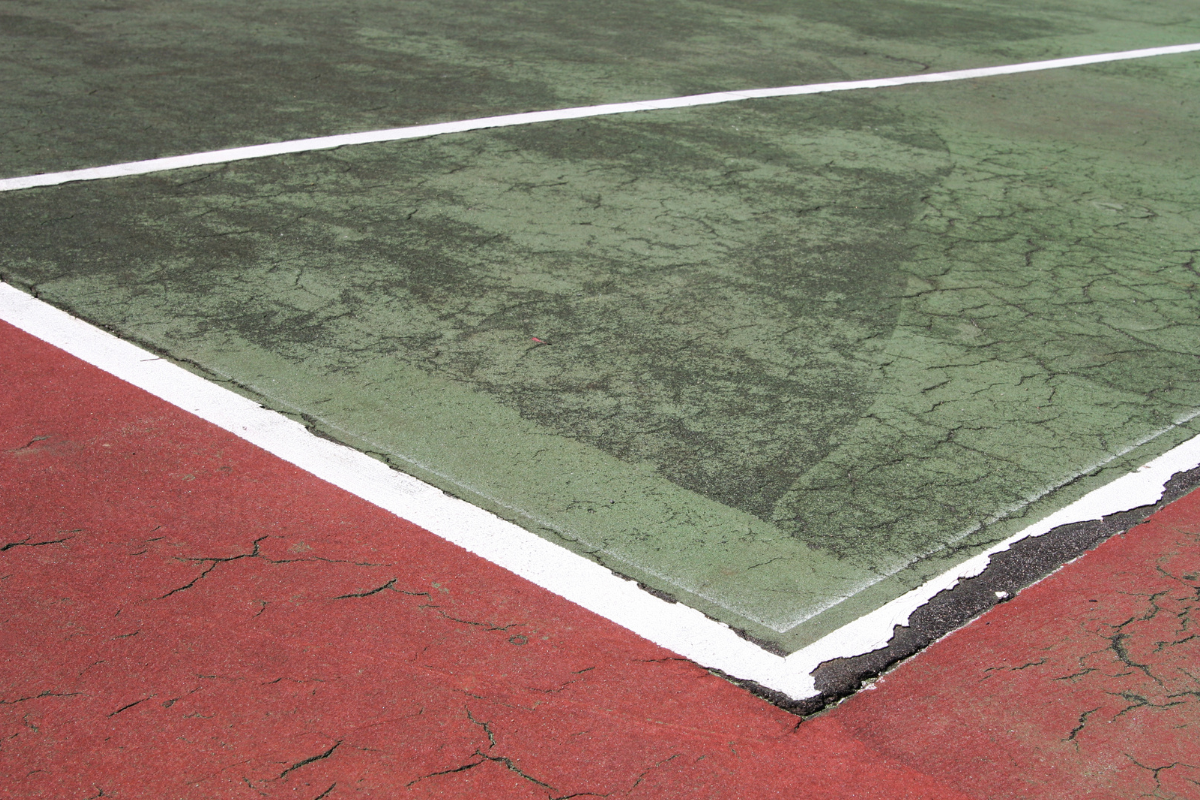
Fall Crack Repair & Winter Weatherproofing for Hard Court Surfaces
Read More
When you step onto a premium tennis court, you notice the crisp lines, the perfect surface tension, and perhaps most importantly, the professional atmosphere. That sense of seclusion and focus is not just about the location; it is often the result of a high quality windscreen.
At Keystone Sports Construction, we have seen how the right material can transform a windy, exposed court into a private, professional grade arena. However, with various weights, weaves, and materials on the market, making the right choice requires a bit of technical “know-how”for tennis installations.
Before diving into materials, it is important to understand what a windscreen actually does. It is rarely just about blocking the breeze.
When evaluating materials, you need to balance three main factors: Visibility (Opacity), Ventilation (Wind Resistance), and Volume (Durability).
How much do you want to see through the fence? “Closed mesh” options provide up to 95% opacity, offering maximum privacy. “Open mesh” options usually hover around 75 to 80%, allowing for more visibility and airflow.
A windscreen acts like a giant sail. On a windy day, it exerts massive pressure on your chain link fence. If you choose a material that is too dense without proper reinforcement, you risk bending your fence posts or even pulling the fence down entirely.
Tennis courts are high UV environments. Without the right chemical treatments, windscreens can become brittle, fade, and tear within a couple of seasons.
High Density Polyethylene (HDPE) is the most common choice for schools, parks, and residential courts. It is lightweight, moisture resistant, and will not rot or mildew.
Often referred to as “VCP,” this is the gold standard for high traffic clubs and tournament venues. It consists of a polyester core coated in a thick layer of vinyl.
Polypropylene is a popular alternative that offers a cloth like feel. It is naturally UV stable and maintains its color exceptionally well.
The “weave” of the material determines the airflow. This is arguably the most critical decision for the structural integrity of your fence.
| Feature | Open Mesh | Closed Mesh |
| Wind Passage | High (approx. 20-30%) | Low (approx. 5-10%) |
| Privacy | Moderate | High |
| Ball Tracking | Good | Excellent |
| Fence Stress | Low | High |
When you work with Keystone Sports Construction, we do not just “hang a net.” Proper installation involves two key features:
For tall fences or high wind areas, we cut “half moon” or rectangular windows into the material. These flaps stay closed during light breezes but swing open during heavy gusts, allowing air to pass through safely without compromising the screen’s integrity.
A windscreen is only as strong as its edges. We recommend double stitched vinyl hems with brass grommets every 12 to 18 inches. This makes certain that the tension is distributed evenly across the entire length of the fence.
To maximize the lifespan of your chosen material, follow these simple maintenance steps for tennis court installation in MD & the tri-state area:
The right windscreen does more than just block the wind; it defines the playing experience. Whether you prioritize the rugged durability of Vinyl Coated Polyester or the cost effective reliability of Polyethylene, investing in quality materials will pay dividends in player satisfaction and court longevity. Contact Keystone Sports Construction today for a consultation on your next windscreen project. Let’s build a court that looks as good as it plays.