Resurfacing Frequency: When to Budget for Your Mill and Pave Services
Read More
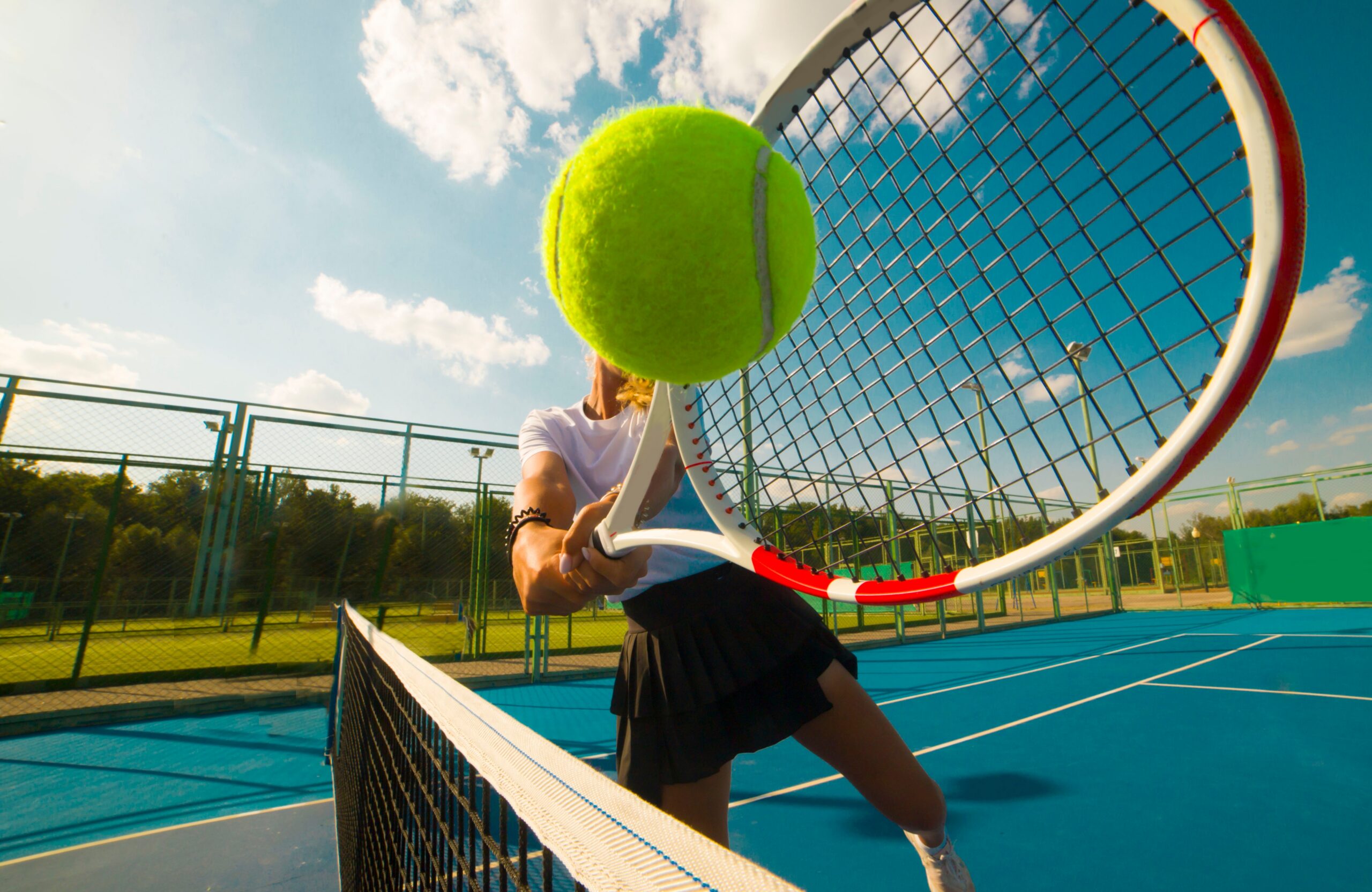
Shock absorption is the single most overlooked specification in tennis court installation and construction, basketball court construction and hardwood court construction, and it is the one that athletes feel in their knees every practice.
A properly engineered layered court can cut the impact force returned to a player’s body by roughly 30% to 50% compared to bare concrete, without turning the surface into a dead, unplayable slab. The difference comes down to what sits between the compacted stone base and the line paint.
This guide walks athletic directors, park directors and facility owners through the physics, the layer-by-layer build and the trade-offs that decide how a court plays five and fifteen years from now.
Concrete and unpadded asphalt are nearly perfect energy reflectors. When a player lands from a rebound or pushes off a hard stop, most of that kinetic energy comes straight back up through the ankles, knees, hips and lumbar spine instead of dissipating into the surface.
Over a season of three-hour practices, that repetition adds up. The overuse patterns we hear about most from coaches on older municipal courts include:
None of these are dramatic acute injuries, which is exactly why they get tolerated. They quietly reduce availability, and they are largely a surfacing problem rather than a conditioning problem.
Two measurements govern how a court behaves. Force reduction describes how much impact energy the system absorbs relative to concrete. Energy restitution (and its cousin, vertical ball deflection) describes how much energy the surface gives back to a bouncing ball.
Push force reduction too high and you get a surface that protects joints but eats ball bounce, frustrates competitive play and feels unstable during lateral cuts. Push it too low and you have a fast, predictable court that punishes the athletes using it. The target is a system that absorbs vertical impact while still returning at least 90% of the ball bounce measured on concrete.
For outdoor acrylic courts, cushioning also shifts pace. Adding rubber layers typically slows a tennis court by one International Tennis Federation pace category, moving a medium-fast surface toward medium. That is a design decision worth making deliberately with your coaching staff, not a side effect to discover after the lines are painted.
Shock absorption is a system property. A premium cushion installed over a failing base will crack within two seasons, so the layers below matter as much as the layers you can see.
Everything starts with drainage and compaction. On most Pennsylvania and Mid-Atlantic sites we excavate to subgrade, install 4 to 6 inches of compacted aggregate, and pave either asphalt or post-tensioned concrete over it.
Any base movement telegraphs through the cushion. Precision here is what keeps a court flat enough to hold water in puddles no deeper than the thickness of a nickel, the accepted tolerance for tournament play.
This is where force reduction is actually created. Outdoor cushioned acrylic systems build up 2 to 8 layers of rubber granules bound in acrylic emulsion, usually totaling 2 to 6 millimeters of finished thickness before color coats.
For higher-absorption applications, we install prefabricated shock pads or poured-in-place rubber underlayment at 6 to 12 millimeters. Thicker is not automatically better: a 10 millimeter pad under a competitive tennis court can slow pace more than a coaching staff will accept, while the same pad under a multi-purpose recreation court is welcome.
The finish system carries two or three pigmented acrylic coats with graded silica sand for slip resistance, then textured line paint. Good topcoats are UV-stable so colors hold for 6 to 8 years, and they are formulated to stay flexible rather than curing into a hard shell that cancels out the cushion underneath.
Sand gradation is adjustable. A finer texture suits pickleball and wheelchair play; a coarser blend gives tennis players more grip on hard slides.
Different sports want different amounts of give, and multi-use facilities have to negotiate between them.
Indoor maple systems achieve absorption through subfloor design rather than rubber cushion coats. A typical floating system pairs 33/32 inch northern hard maple with foam or rubber pads on a plywood subfloor, delivering area-elastic behavior that spreads load across a wider footprint.
Panel and channel systems cost less and sit lower, which matters when slab elevation is fixed. Anchored-resilient systems cost more but hold up under heavy event schedules. Installed pricing for a full hardwood gym floor generally lands between $9 and $18 per square foot in 2026, depending on subfloor type, moisture mitigation and game line complexity.
A well-built cushioned acrylic system reduces peak impact force by roughly 30% to 50% compared with bare concrete, depending on cushion thickness and rubber density. Indoor area-elastic hardwood systems can reach 50% or more, which is why gymnasium floors feel noticeably softer than an outdoor slab.
Properly specified cushion keeps vertical ball rebound at 90% or higher of the concrete reference value, so bounce stays competitive. It does slow horizontal pace slightly, typically shifting a tennis court one category on the ITF pace scale.
Yes, if the pavement is structurally sound, cushion layers and new acrylic can usually be overlaid in 5 to 10 working days. Courts with active structural cracking or standing water need base repair or an overlay first, otherwise the same defects reappear within two seasons.
Most new outdoor courts take 5 to 8 weeks, including 14 to 30 days of asphalt curing before surfacing begins. Rain delays surfacing because acrylic coats need dry conditions above 50 degrees Fahrenheit and a rising temperature window.
Plan on resurfacing every 5 to 8 years, versus 4 to 6 years for non-cushioned acrylic. The cushion layers themselves often last 15 years or more, so most resurfacing work involves color and texture coats rather than rebuilding the system.
Send us your site details and the sports your facility needs to support, and we will walk you through cushion options, realistic budget ranges and a construction window that fits your season calendar. Keystone Sports Construction handles base work through final line striping on every court we build. Contact us today!