Beyond the Baseline: Designing Your Ultimate Home Pickleball Sanctuary with Keystone Sport Construction
Read More
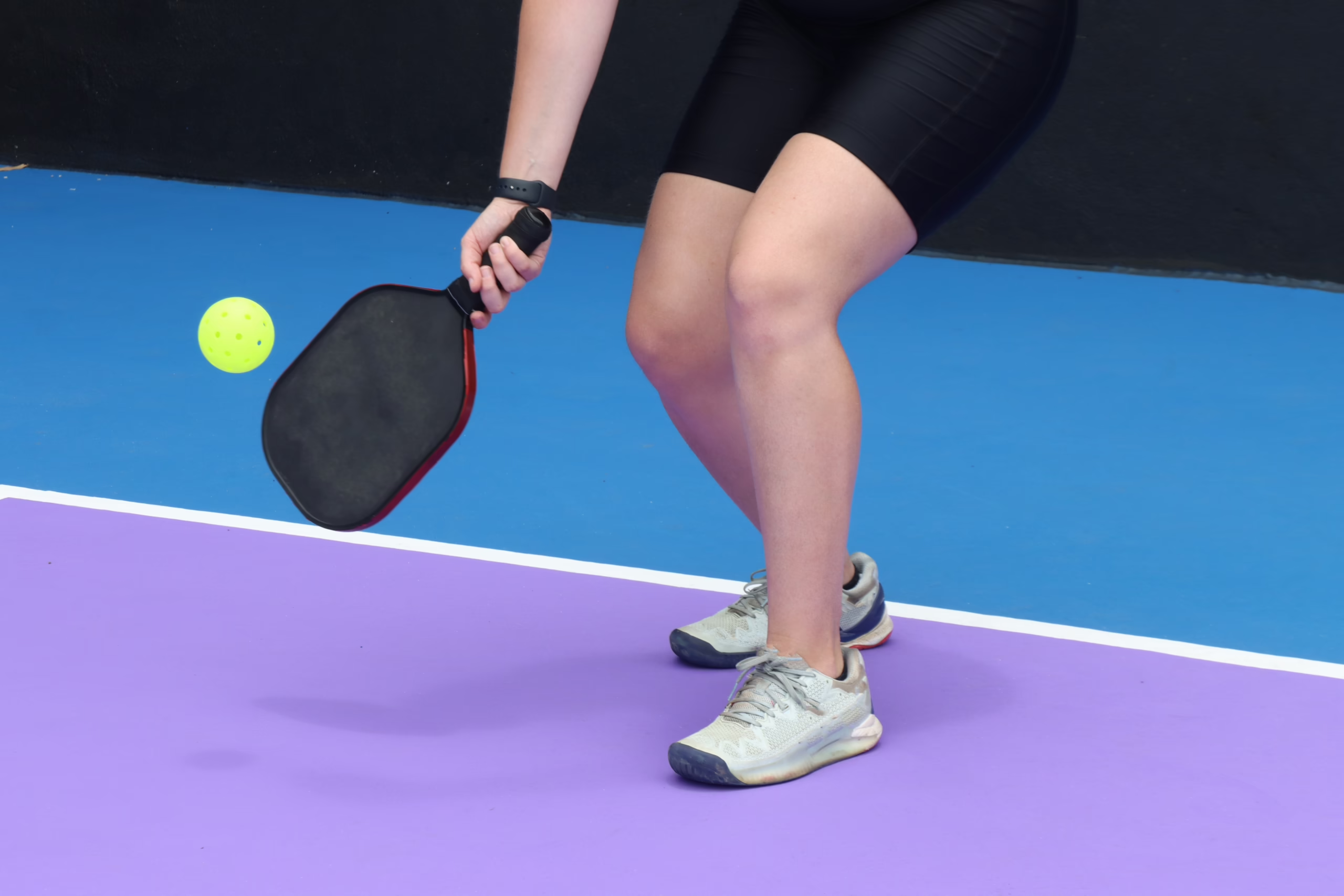
In the world of sports construction, a court is never “just a floor.” To a casual observer, a pickleball court is a colorful rectangle with some lines and a net. To a competitive player, that surface is a complex laboratory of friction, energy transfer, and aerodynamics.
At Keystone Sports Construction, we believe that understanding the science behind the surface is the key to building better facilities. Specializing in pickleball court resurfacing in NJ, we know that whether you are managing a municipal park or installing a private court, the “speed” and “grit” of your surface will define the player experience.
In pickleball, “speed” refers to the Pace Rating. This is a measurement of how much a ball slows down after it hits the ground. When a pickleball strikes the court, two primary physical forces are at play: Vertical Kinetic Energy and Horizontal Friction.
If speed is the tempo of the game, grit is the control. In technical terms, grit refers to the texture of the acrylic coating. This texture is created by mixing specific types of silica sand into the paint.
When a player hits a “cut” or “topspin” shot, they make the ball spin through the air. When that spinning ball hits a high-grit surface, the texture grabs the skin of the ball.
Think of it as a friction calculation. The force of friction is equal to the grit level multiplied by the force of the impact. A higher grit level means the spin turns into a sharp change in direction when the ball bounces. On a slick court, the ball might just slide, which takes away the player’s advantage.
The physics of grit also requires the sand to be spread perfectly. If the sand is not mixed evenly during the Keystone installation process, the court will have “hot spots.” A ball hitting a smooth patch will skid, while a ball hitting a sandy patch will jump. Consistent texture is what separates a professional court from a basic paint job.
At Keystone Sports Construction, we have to account for thermodynamics when planning a pickleball court installation in VA, as outdoor courts in the region can face extreme temperature swings.
Pickleball surfaces are typically composed of multiple layers:
As the sun beats down, the dark pigments in the court absorb thermal energy. This can slightly soften the plastic of the pickleball, making it “mushy.” A high-quality UV-resistant coating makes it so the surface friction remains constant even when the court temperature rises 20 degrees above ambient air.
The “right” physics depends on your audience.
Professional players often prefer a medium-fast court. They have the reflexes to handle high velocity, but they require enough grit to execute the precise third-shot drops and technical spins that define high-level play.
For recreational or senior play, a slow court is often preferred. By increasing the grit, we increase the ball’s deceleration. This extends rallies, reduces the physical strain of fast reactions, and makes the game more accessible and social.
Physics also dictates longevity. Grit is not just for playability; it is for safety. A surface with no texture becomes incredibly slippery when a player perspires or when a light dew settles on the court.
How do we control these variables? It comes down to the mix design.
When Keystone Sports Construction prepares a court, we do not use a one-size-fits-all bucket of paint. We calibrate the sand-to-binder ratio.
Pickleball is a game of inches and milliseconds. When you understand that the surface is an active participant in every rally, the importance of professional construction becomes clear. From the way the acrylic resin grips the plastic ball to the way the sub-base handles thermal expansion, every layer contributes to the physics of the game.
At Keystone Sports Construction, we specialize in the fine-tuning of these variables. We do not just build courts; we engineer playing environments that are fast where you want them, grippy where you need them, and durable enough to withstand the elements for years to come.
Ready to build a court backed by science? Whether you are looking for a high-grit slow court for your retirement community or a professional-grade fast surface for a private club, we can help.
 February 18, 2026
 December 27, 2025
 October 27, 2025