
The Importance of Proper Drainage in Sports Field Construction
Read More
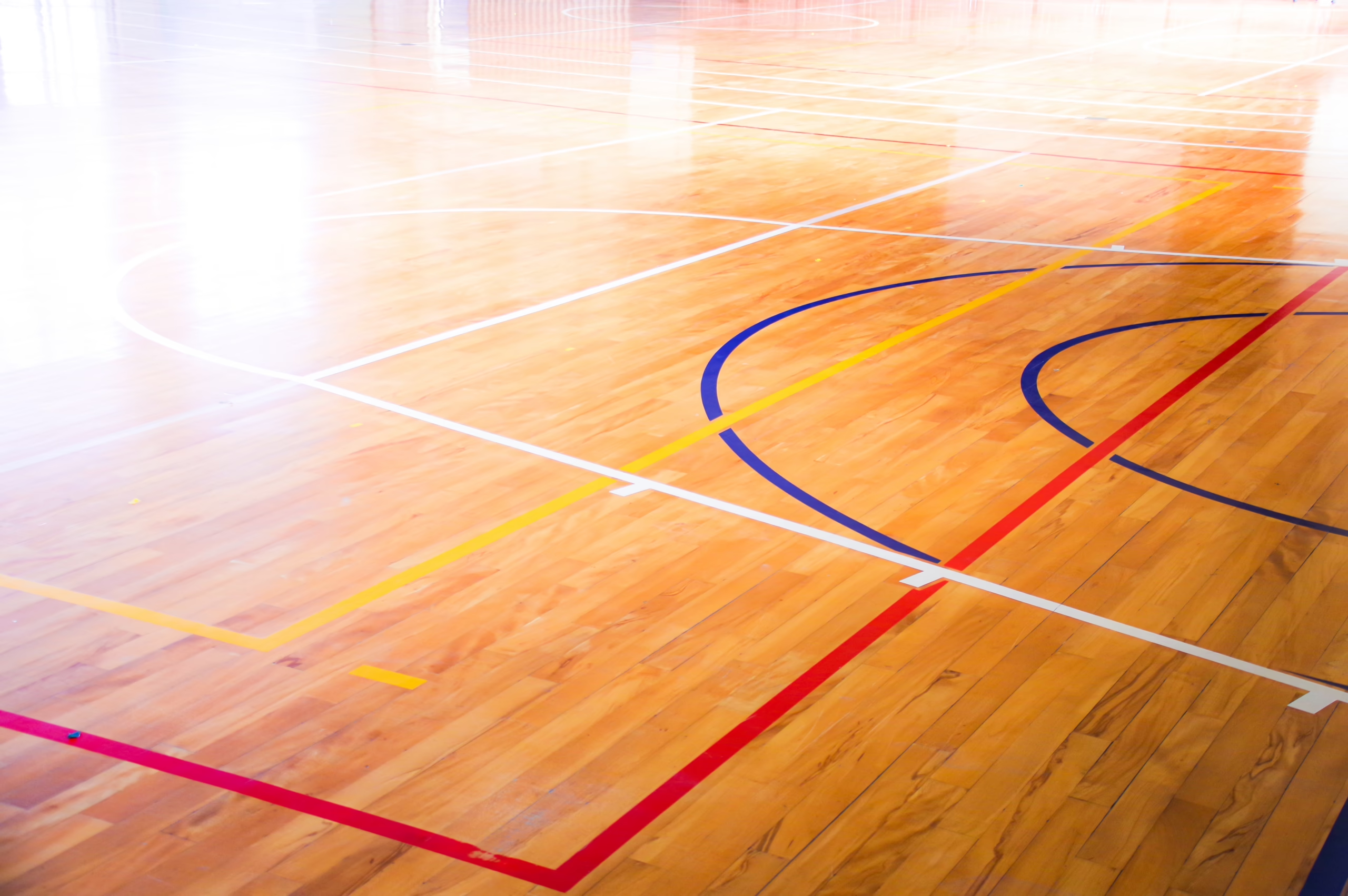
From the repetitive thumping of the ball against the wooden floor to the roar of 50,000 people at once after scoring, the nature of sports arenas is one that comes with noise. But there comes a point where “energetic” becomes “chaotic.”
Without good sound management, the arena will turn into an echo chamber that will make announcements impossible to understand and make players unable to concentrate and leave spectators hearing their own echoes in their heads.
Today’s architectural design for sports arenas goes beyond simply sight lines and capacity. Balancing these factors will take both good materials and smart architectural design. Keystone Sports takes this into account when providing hardwood floor installation in Washington D.C.
Sports structures are usually built to be tough and hygienic, hence the presence of many reflective surfaces like:
They are highly reflective, which causes the sound waves that hit them to be reflected back. It results in reverberation, which is the echo effect caused by sound waves bouncing off surfaces. A reverberation time of more than 3-4 seconds in a normal gymnasium makes it impossible to communicate.
However, acoustics should be considered at the very bones of the building. There are different spatial approaches that architects use to diffuse sound waves. Flat and large parallel walls will create “flutter echoes”. In order to avoid such an effect, architects angle the walls to achieve diffusion, not reflection. Besides, by creating curves in the walls, architects can effectively diffuse the sound.
It is worth noting that the roof is the biggest surface area in a stadium. Using perforated metal deck systems enables sound to travel through the exterior shell of the stadium into the acoustic insulation located in between the flutes of the metal. In this way, the whole roof becomes an absorbing sponge.
When designing stadiums, architects often create zones with different functions. In order to reduce noise transfer, architects create acoustic buffers between the main zone and the quiet zones. This entails the use of double-wall construction and decoupling of the wall structure.
To combat the limitations of hard building materials, designers specify specialized acoustic treatments. These are generally categorized into absorbers (which soak up sound) and diffusers (which scatter sound).
In facilities with high, exposed ceilings (like aquatic centers or indoor turf fields), vertical baffles are the gold standard.
At the spectator and athlete level, materials must be “ball-impact resistant.” Standard office acoustic foam would be shredded in a gymnasium.
While you can’t put carpet on a basketball court, the sub-flooring system matters. Modern athletic floors use resilient underlayments, rubber or foam layers that “decouple” the wood from the concrete slab. This reduces the “thump” of footsteps and ball bounces from vibrating through the building’s structure.
Before a single brick is laid, acoustic consultants use BIM (Building Information Modeling) and specialized software like EASE (Enhanced Acoustic Simulator for Engineers). These tools allow designers to “auralize” the space. They can virtually place a speaker on the field and “listen” to how the national anthem will sound in Section 302, adjusting the placement of absorption panels until the clarity is perfect.
Investing in sound dampening isn’t just about comfort; it’s about functionality and safety.
| Benefit | Impact |
| Safety | Clear PA announcements are critical during emergency evacuations. |
| Revenue | Better acoustics allow venues to host concerts and corporate events, not just sports. |
| Athlete Performance | Reduces stress and allows teammates to communicate clearly on the field. |
| Fan Experience | Spectators can hold conversations without shouting, leading to longer stays and higher concession sales. |
The design of a top-notch sports complex is an auditory sensation. Where the visuals are what get the people to show up, it is the acoustics that determine their experience once they have arrived. Call our team for hardwood floor installation in VA and improve the overall experience of your facility.
With the clever use of architecture along with tough, durable materials, it is possible to turn the raucous “noise bucket” into a finely tuned venue where every sound is heard clearly. Contact Keystone Sports Construction for an estimate today!

