The Physics of Play: Understanding Pickleball Surface Speed and Grit
Read More
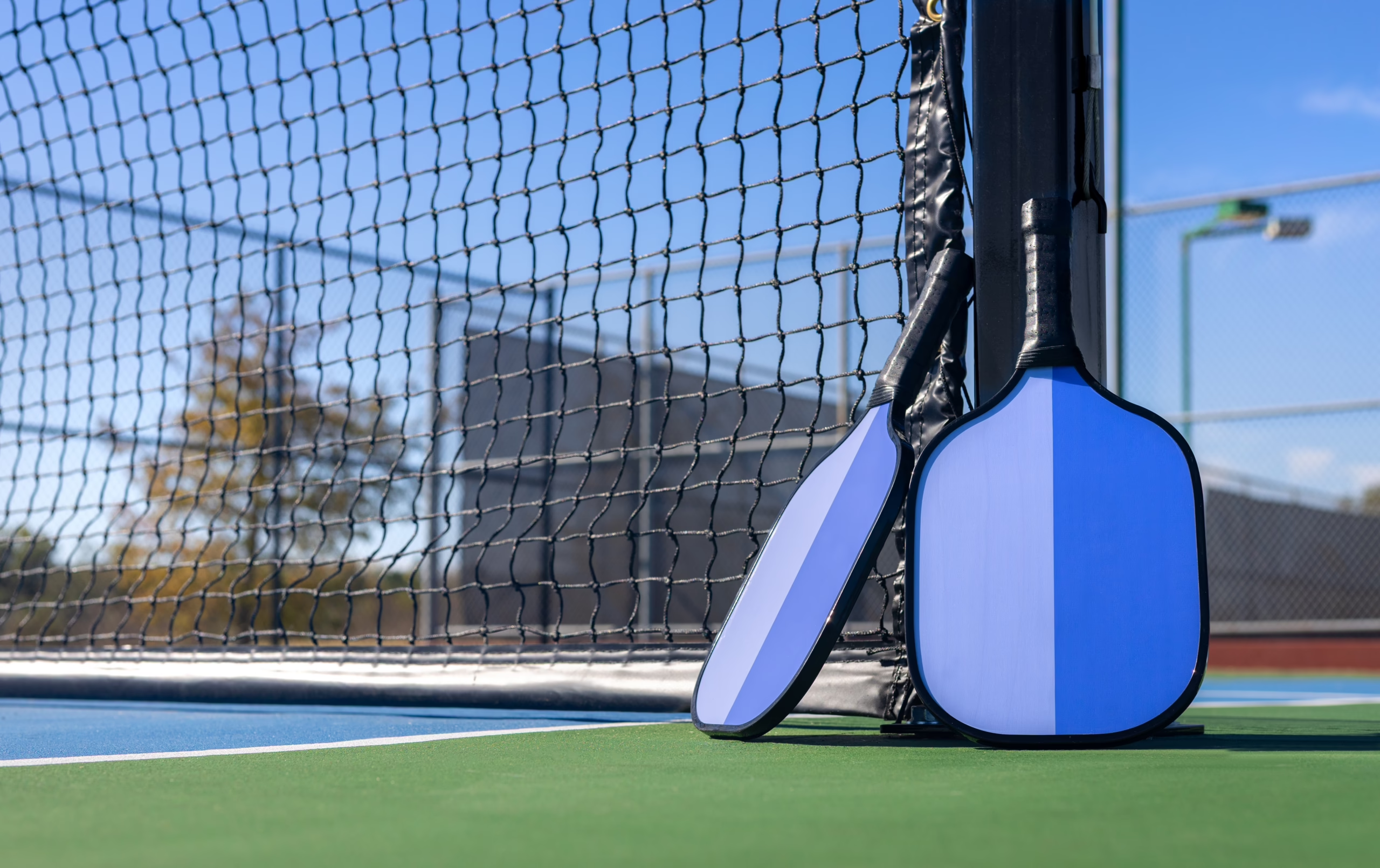
Pickleball isn’t just a passing fad anymore; it’s officially changed the way we play. But as everyone from local parks to high-end country clubs rushes to build new courts, we’re seeing a big difference between a court that’s just “okay” and one that’s built to last.
At Keystone Sports Construction, professional pickleball court builders, we treat every court like a precision instrument. If the lines are off by an inch, the net is uneven, or the surfacing is applied in the wrong weather, the game feels “off” and the court won’t last.
Here is how we handle the details to make sure your investment stays in top shape for years to come.
A court is only as good as what lies beneath it. Many contractors treat a pickleball court like a driveway, but the tolerances for sports surfacing are much tighter.
Proper drainage is the “invisible” quality standard. A professional court must have a consistent slope to allow water to run off without creating “birdbaths” or standing water. We utilize laser-leveling technology during the sub-base preparation so the slope is uniform across the entire 30′ x 60′ footprint.
After the asphalt or concrete is poured, we perform a flood test. If a depression holds water deeper than the thickness of a nickel after one hour of drying in the sun, it requires corrective leveling before the surface layers are applied.
While asphalt is common, post-tensioned concrete is the gold standard for longevity. By using internal cables to keep the slab under tension, we can virtually eliminate the structural cracking that plagues traditional asphalt courts. Quality control here involves monitoring the PSI of the pour and making sure the cables are torqued to exact specifications.
Pickleball is a game of dinks and lobs where every inch matters. The total playing area for a standard court is 20′ x 44′, but the quality control process focuses on the layout accuracy.
| Feature | Regulation Dimension | QC Tolerance |
| Non-Volley Zone (Kitchen) | 7 feet from net | +/- 1/8 inch |
| Sideline to Sideline | 20 feet | +/- 1/4 inch |
| Baseline to Baseline | 44 feet | +/- 1/4 inch |
| Net Height (Center) | 34 inches | Exact |
If a contractor “eyeballs” the Kitchen line, it fundamentally changes the strategy of the game. At Keystone, we use precision chalking and double-check diagonal measurements (the 3-4-5 triangulation method) to verify the court is perfectly square before a single drop of paint touches the ground.
The “cushion” and “bite” of a court come from the acrylic surfacing system. This isn’t just paint; it is a multi-layered chemical application.
The speed of a pickleball court is determined by the amount of silica sand mixed into the acrylic.
We maintain “batch consistency.” By measuring the exact weight of sand added to every gallon of coating, we guarantee that the friction coefficient is identical on the baseline as it is at the kitchen line.
In pickleball, the lines are not just boundaries. They are active participants in the game. “Out” is out, and “Kitchen violations” are a constant point of contention.
Professional line striping requires textured paint. Using standard highway paint or flat outdoor latex creates a slip hazard. Keystone uses specialized white acrylic marking paint infused with fine glass beads or sand so the texture of the line matches the texture of the court. This prevents the ball from “skidding” differently when it hits a line versus the open court.
Quality control extends beyond the white lines.
As pickleball continues to grow, the demand for high-quality facilities will only increase. Whether you are a homeowner looking for a backyard sanctuary or a municipality building a 24-court complex, the standards remain the same.
Do not settle for a slab of asphalt with lines on it. Invest in a professional-grade installation that prioritizes player safety, game integrity, and long-term durability. Contact Keystone Sports Construction today for a consultation. Let’s build a court that does justice to the game.
 February 22, 2026
 February 18, 2026
 December 27, 2025