
Gwynedd Mercy University Stadium Turf Field Replacement | Gwynedd Valley, PA

Gwynedd Mercy University Stadium Turf Field Replacement | Gwynedd Valley, PA
Location: Gwynedd Valley, PA
Client: Gwynedd Mercy University
Facility: GMercyU Stadium Field
Project Type: Stadium Turf Field Replacement
Surface: Synthetic Turf
Scope: Existing Turf Removal, Synthetic Turf Installation, Ball Stop Netting
Turf System: Slit Film Synthetic Turf
Project Gallery
Project Summary
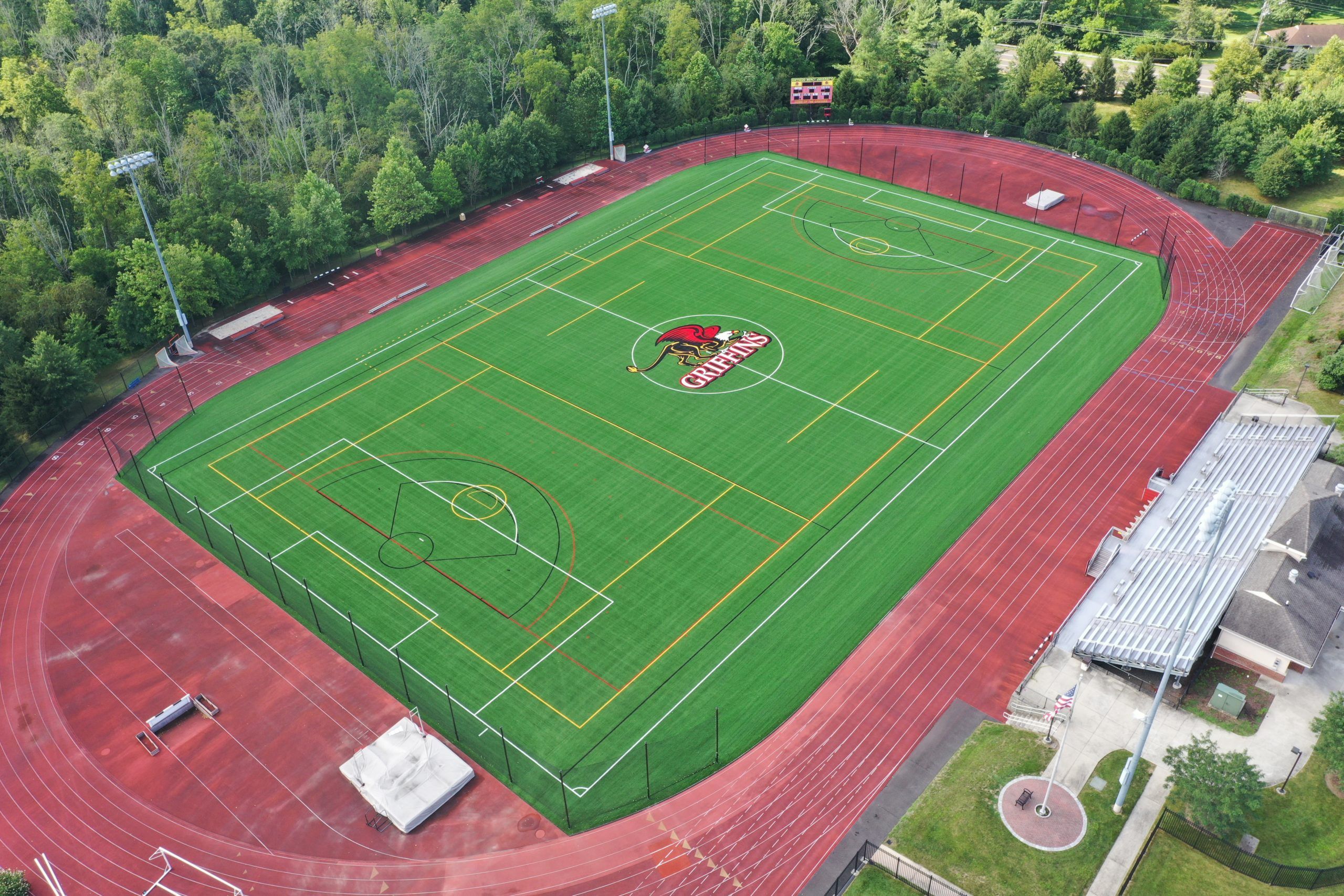
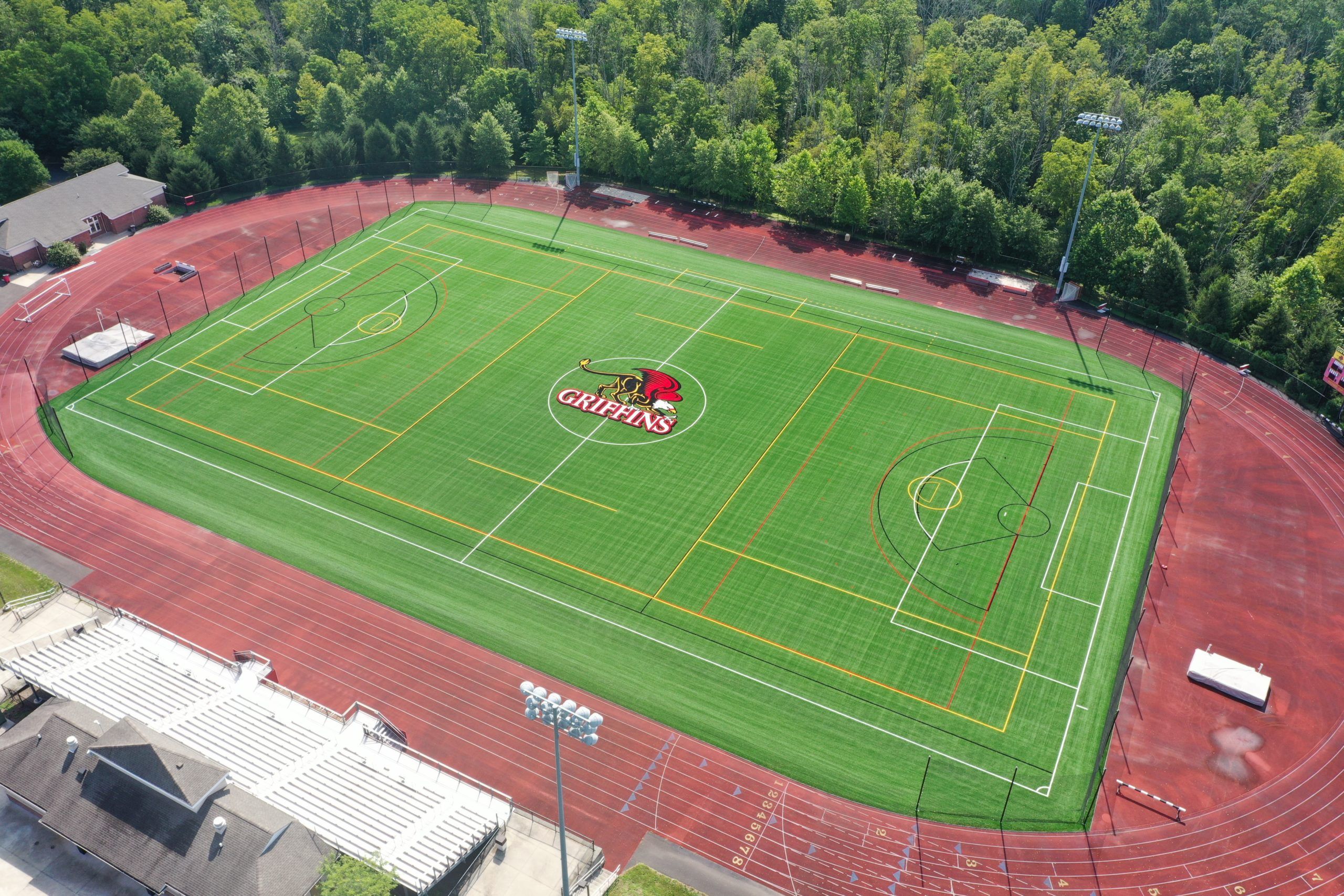
Keystone Sports Construction recently completed stadium turf field replacement at Gwynedd Mercy University in Gwynedd Valley, Pennsylvania.
The Client
The Sisters of Mercy founded Gwynedd Mercy in 1948. Its campus in Gwynedd Valley combines undergraduate education with NCAA Division III athletics.
The Challenge
The stadium renovation paired a replacement playing surface with ball containment around the field. Recovery of the existing infill also formed part of the turf replacement work.
Construction Process
Keystone reclaimed and recycled the existing infill before removing the stadium turf and installing slit film synthetic turf. The project also included installation of a Stormguard ball stopper system around the playing area.
Project Details
- Reclamation and recycling of existing infill
- Removal of existing stadium turf and installation of slit film synthetic turf
- Installation of a Stormguard ball stopper system
Materials & Systems
- Slit film synthetic turf
- Stormguard ball stopper system
FAQs
What happens before replacement turf is installed? A replacement plan should establish how the existing turf will be removed and what will happen to the supporting components. Once accessible, the base and any other retained parts can be evaluated for the work specified in the renovation. Infill recovery, when included, also needs coordination with removal. Resolving these decisions before the new surface is installed helps keep the replacement scope tied to the field’s actual condition and requirements.
How does ball-stop netting protect areas around a field? Ball stop netting helps intercept balls that would otherwise travel into neighboring activity areas, pedestrian routes, or property. Effective placement depends on the sports being played and the paths an errant ball is likely to take. Coverage, support locations, and access around the field all need consideration. A system designed for those conditions can improve ball containment while preserving useful circulation and sightlines around the athletic facility.