
Georgetown University Cooper Field Turf Replacement | Washington, DC
Georgetown University Cooper Field Turf Replacement | Washington, DC
Location: Washington, DC
Client: Georgetown University
Facility: Cooper Field
Project Type: Stadium Turf Field Replacement
Surface: Synthetic Turf
Scope: Existing Turf Removal, Steam Pipe Replacement Coordination, Shock Pad Installation, Turf Installation, Field Graphics
Turf System: Dual-Fiber Synthetic Turf with a Thatch Zone
Project Gallery

Project Summary
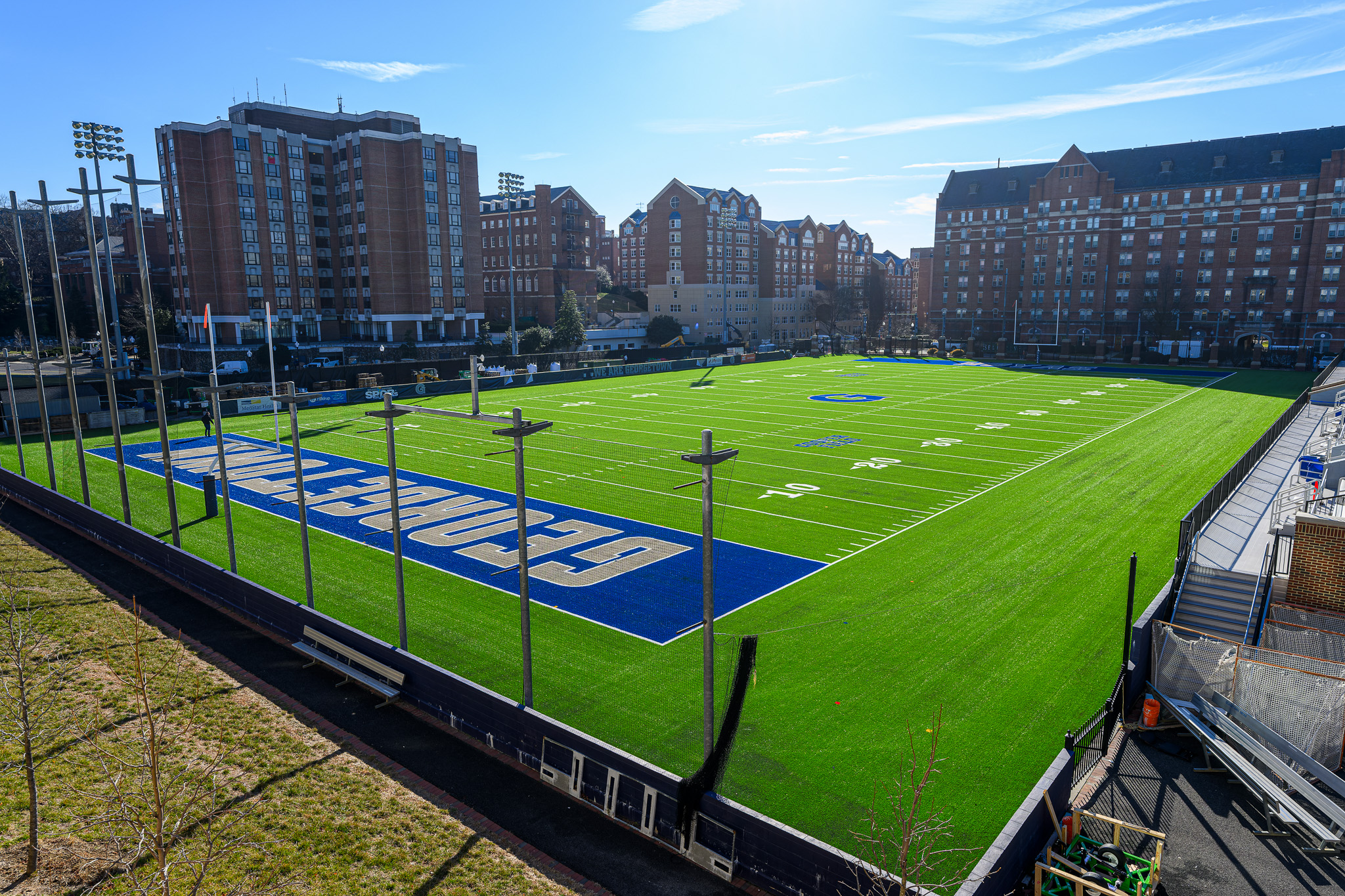
Keystone Sports Construction recently completed synthetic turf replacement at Georgetown University’s Cooper Field in Washington, DC.
The Client
Georgetown University was founded in 1789 by John Carroll. As the nation’s oldest Catholic and Jesuit university, it welcomed its first students in 1792.
The Challenge
A steam pipe beneath Cooper Field made this renovation more than a surface replacement. The turf work needed to be coordinated with excavation and replacement of that underground utility.
Construction Process
Keystone removed the existing turf and coordinated steam pipe excavation and replacement with the university. The team then installed a new shock pad and dual-fiber synthetic turf with a thatch zone.
Project Details
- Removal of existing turf
- Coordination with the university on excavation and steam pipe replacement
- Installation of a new shock pad system
- Installation of dual-fiber synthetic turf with a thatch zone
Materials & Systems
- Dual-fiber synthetic turf with a thatch zone
- Shock pad system
Design Elements
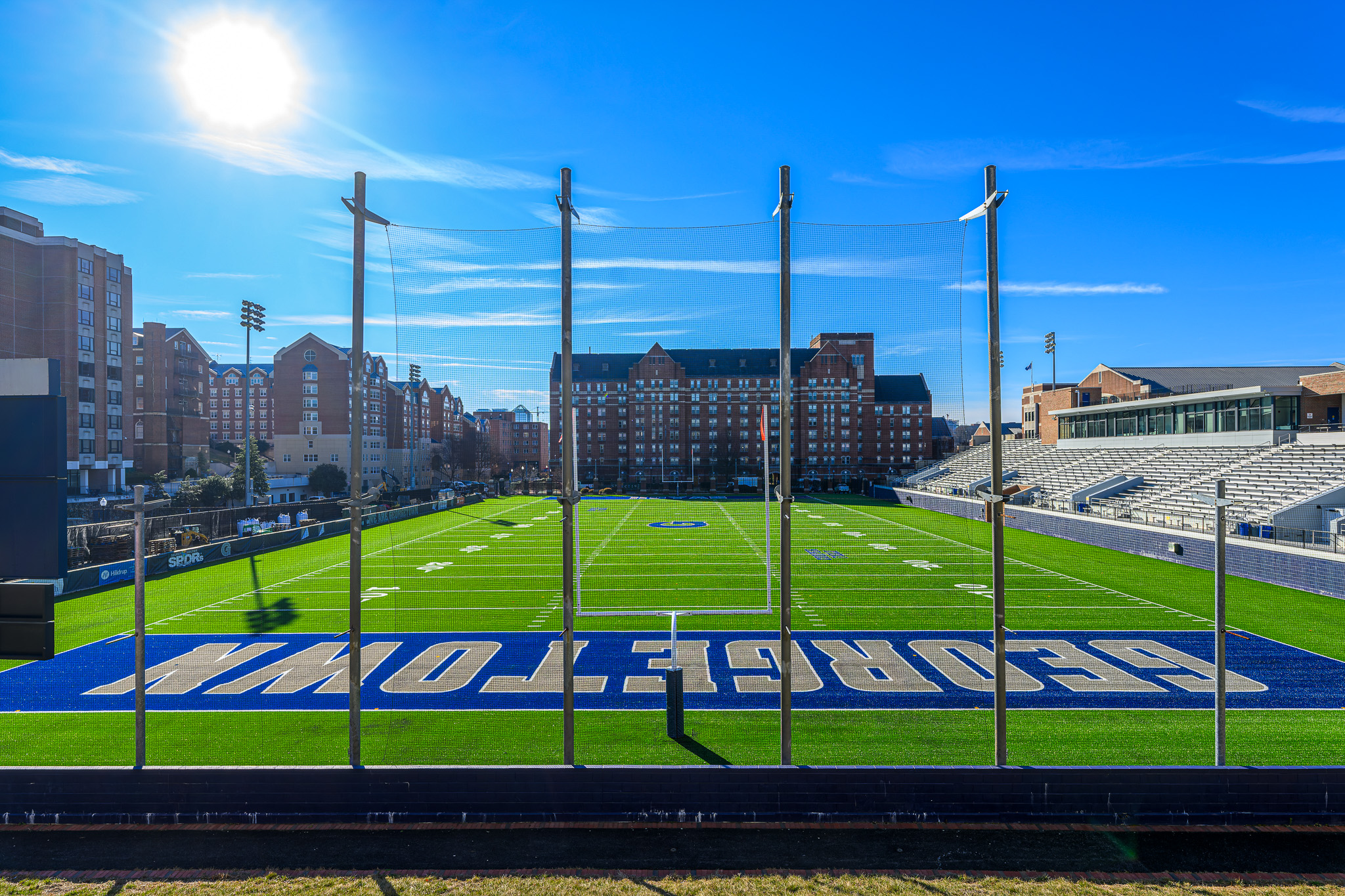
- Custom G midfield logo
- Georgetown and Hoyas end zone lettering
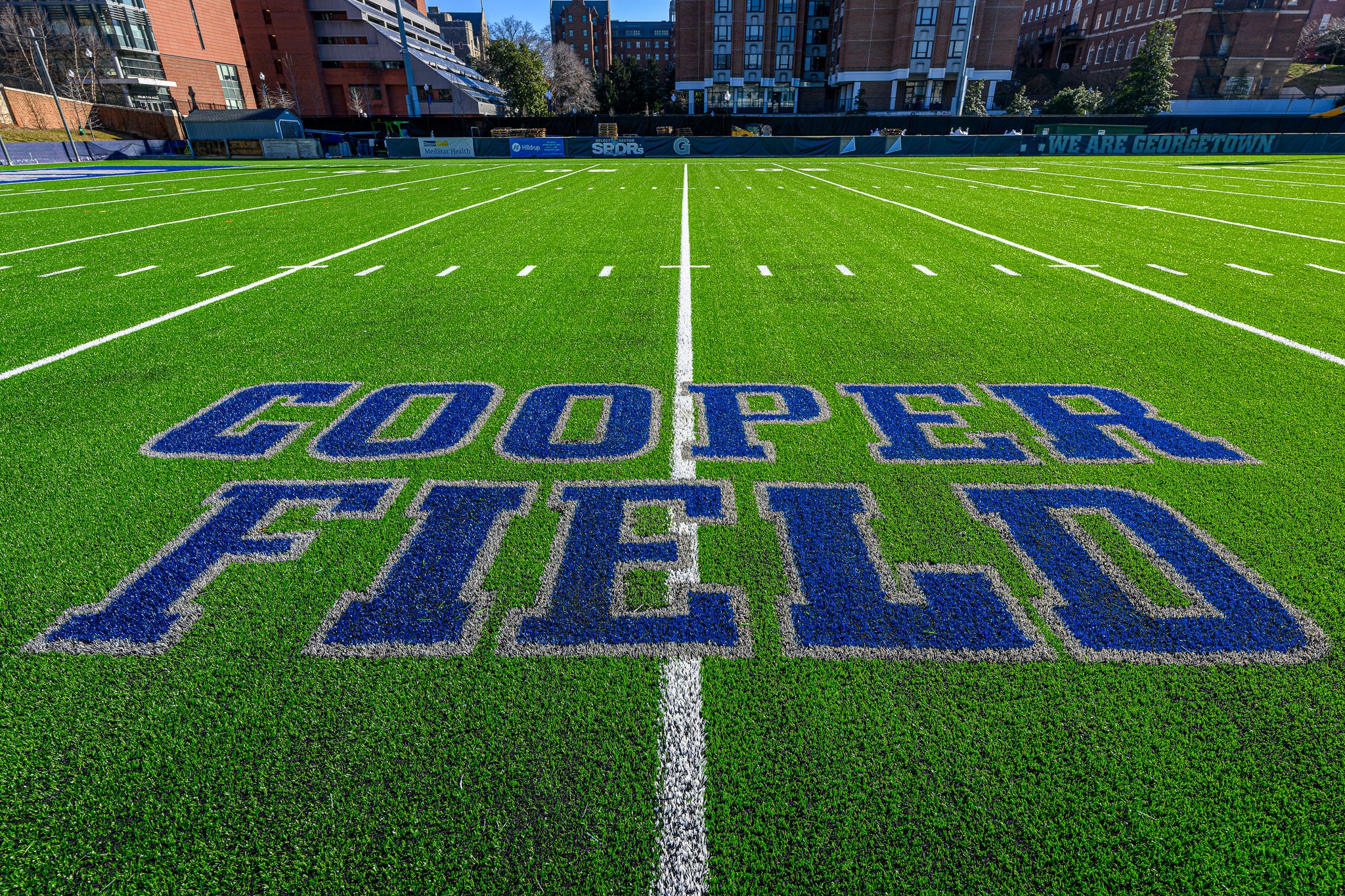
- Cooper Field yard-line logo
FAQs
What happens before replacement turf is installed? Removing the existing turf creates an opportunity to examine the supporting field system before it is covered again. The replacement scope may include retaining suitable components or addressing specific base, drainage, or pad needs identified during evaluation. Work below the surface must be coordinated with turf installation so necessary access is available at the right stage. The extent of that preparation depends on the actual field and should be established for each project.
What does a shock pad contribute to a synthetic turf field? A shock pad adds an impact-attenuating layer beneath synthetic turf and should be evaluated as part of the complete field assembly. Its behavior depends on how it works with the turf, infill where applicable, and supporting base. Some pads also contribute to drainage, but those characteristics vary by system. Selecting compatible components and considering their combined performance is more useful than judging a pad’s thickness or material in isolation.