
Gallaudet University Running Track Replacement | Washington, DC
Gallaudet University Running Track Replacement | Washington, DC
Location: Washington, DC
Client: Gallaudet University
Facility: Hotchkiss Field Athletic Complex
Project Type: Running Track Replacement and Event Area Renovations
Sports: Track and Field
Surface: Synthetic Running Track
Scope: Track Removal, Excavation, Drainage, Paving, Track Installation, Field Event Equipment
Project Gallery
Project Summary
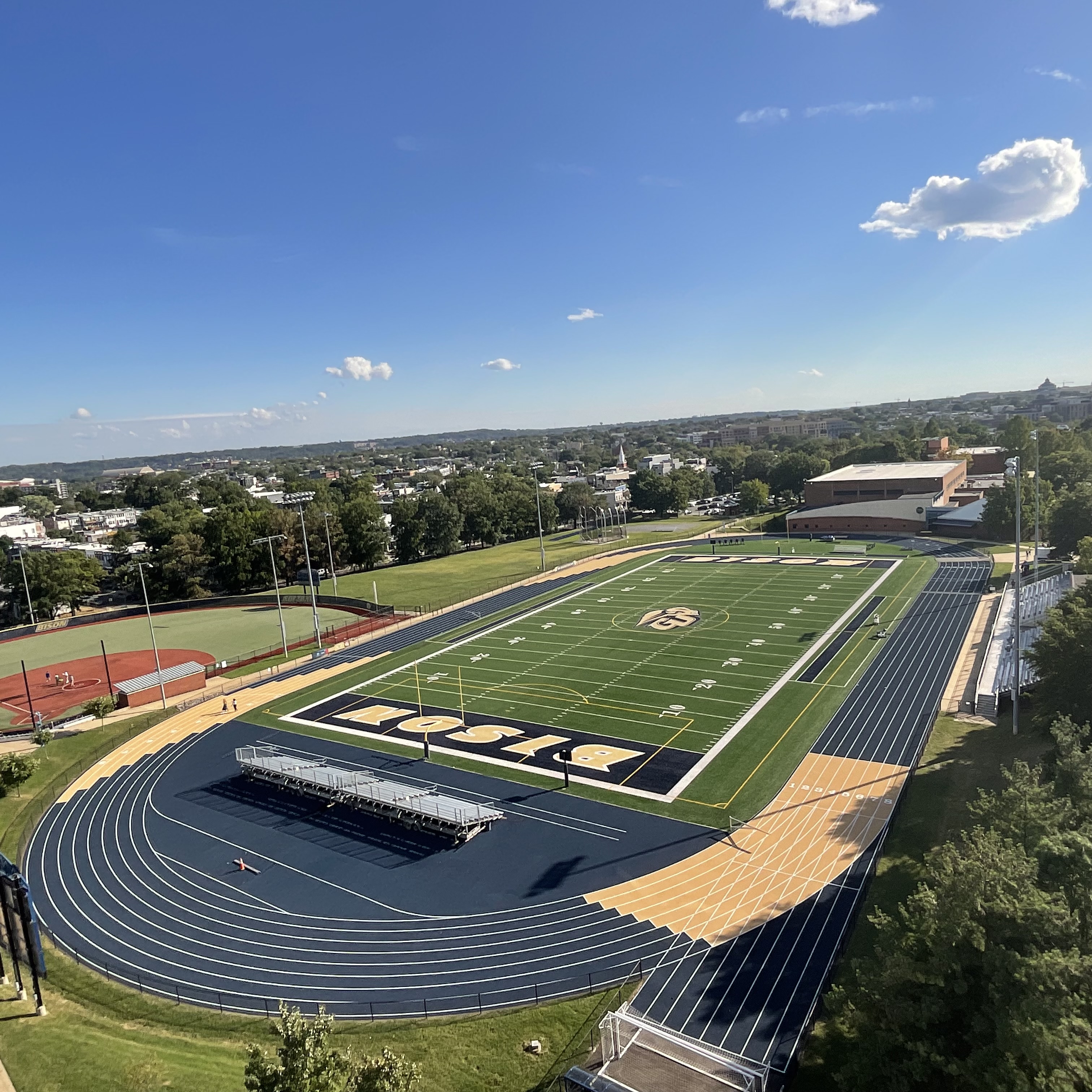
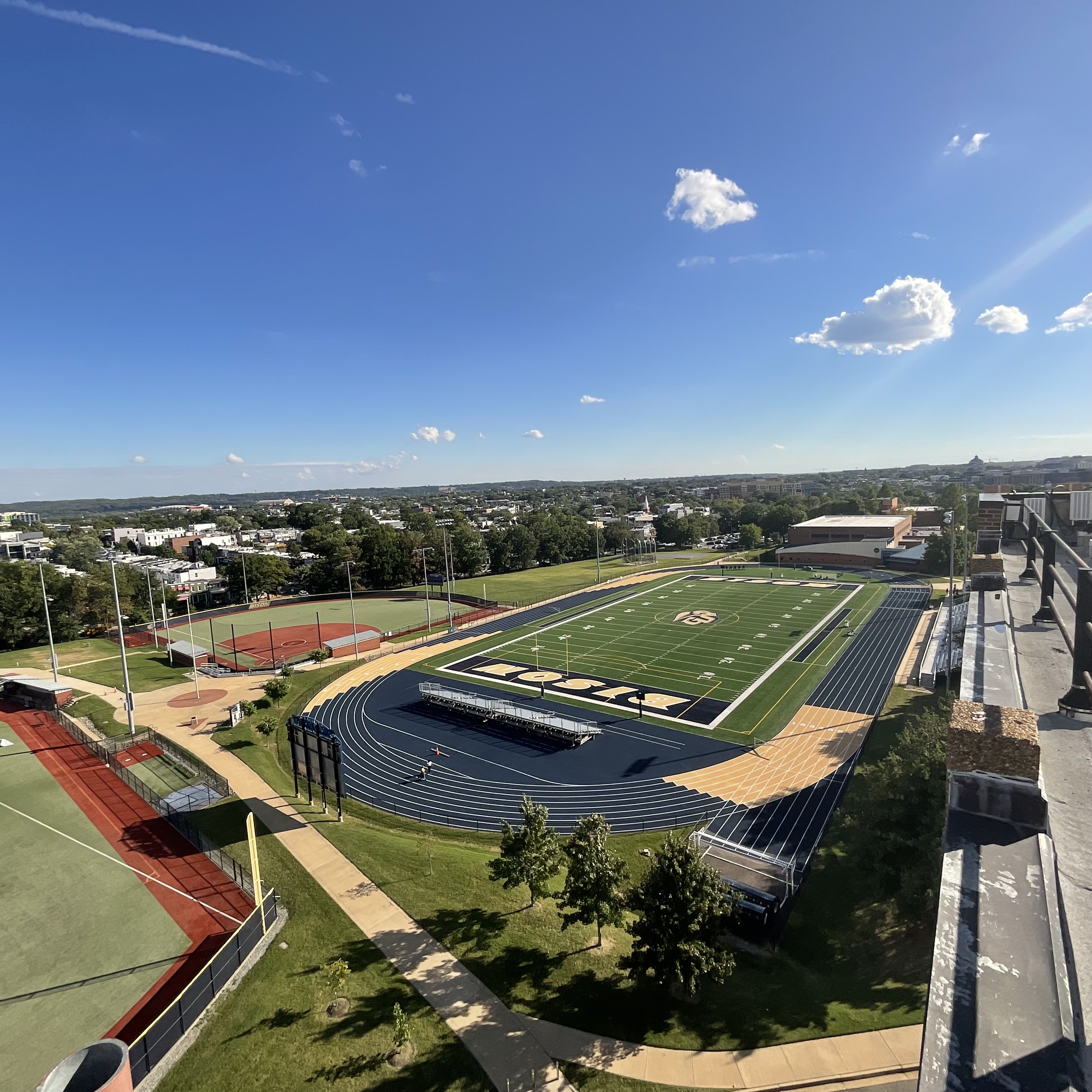
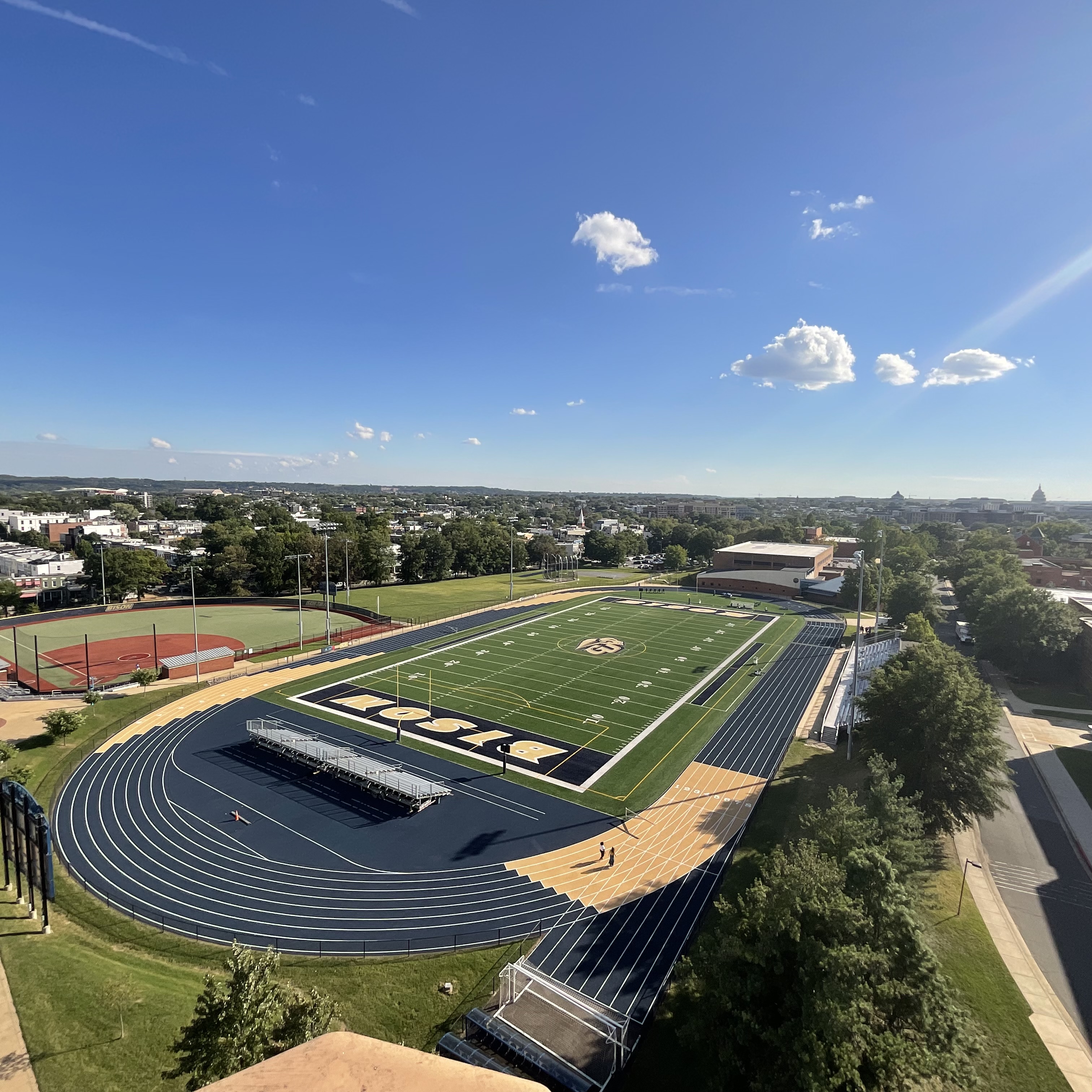
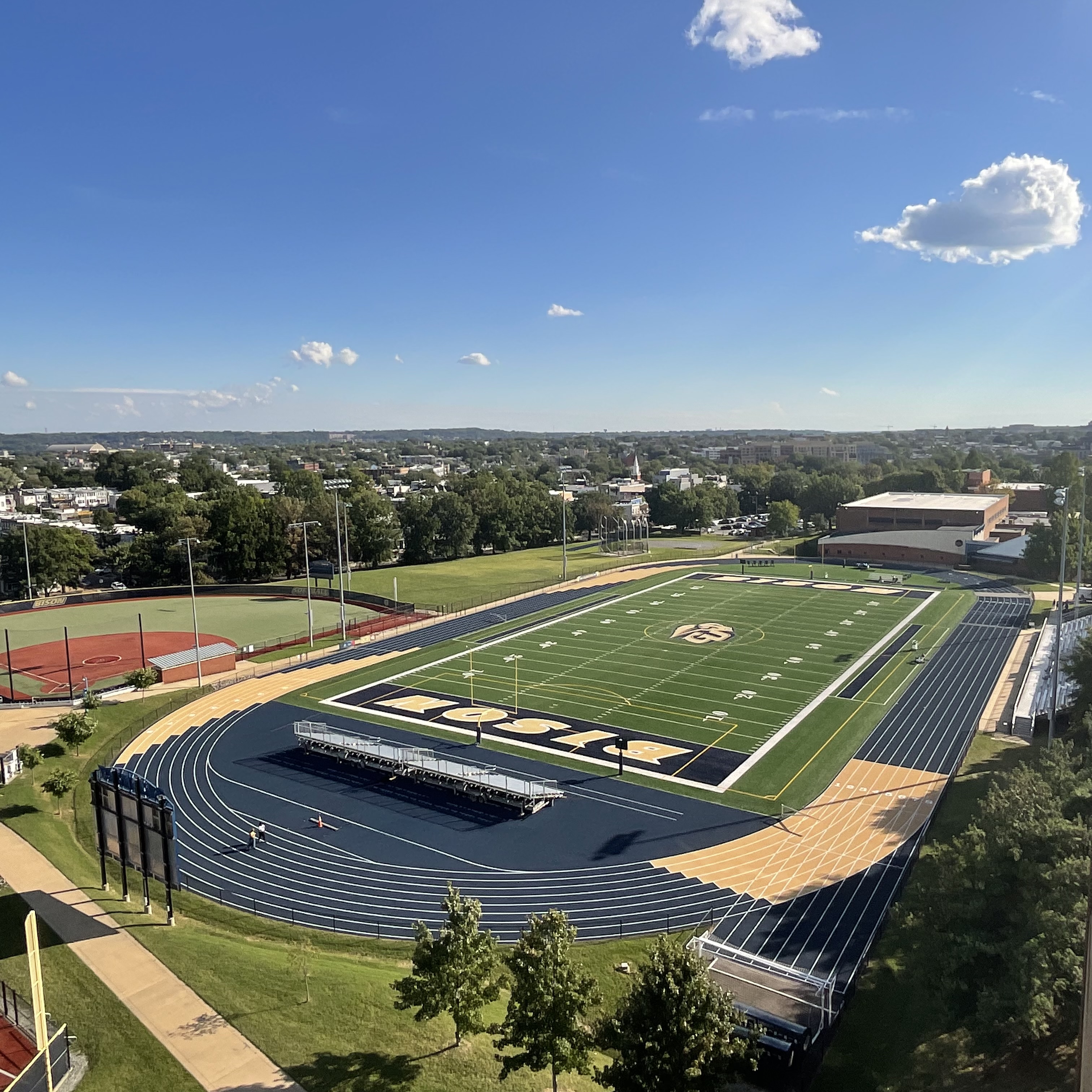
Keystone Sports Construction recently completed running track replacement and event area renovations at Gallaudet University’s Hotchkiss Field athletic complex in Washington, DC.
The Client
Hotchkiss Field honors John Burton Hotchkiss, an 1869 Gallaudet graduate who became a professor at the university. He is also credited with introducing football to the college.
The Challenge
The project extended beyond the track oval to the D-zones and field event equipment. Renewing these areas required excavation, drainage, and paving alongside replacement of the running surface.
Construction Process
Keystone removed the existing running track and excavated the D-zones. New drainage and paving prepared those areas for the renovated athletic complex. The team installed a Rekortan track system and added new steeplechase hurdles, pits, and other field event equipment.
Project Details
- Removal of the existing running track
- D-zone excavation, drainage installation, and paving
- Installation of a Rekortan running track system
- Installation of steeplechase hurdles, pits, and field event equipment
Materials & Systems
- Rekortan synthetic track system
Design Elements
- Steel blue track surface
- Beige exchange zones
FAQs
Does replacing a running track surface always require new asphalt? Replacing the synthetic running surface does not by itself establish that all pavement must be replaced. The asphalt underneath needs to be assessed for cracking, unevenness, and other defects that could affect the new surface. Depending on its condition, preparation or localized repairs may be adequate; more extensive problems can justify milling and repaving. This evaluation separates the needs of the running layer from the work required beneath it.
Why should field event areas be designed with the running track? Planning the oval and field event areas together helps establish how athletes move between activities and where equipment, approaches, and landing areas fit. It also allows drainage and surrounding circulation to be considered across the athletic complex. Event areas can require their own excavation, paving, or equipment, so treating them as part of the overall plan helps avoid conflicts that are harder to resolve once the main track is built.