
Elizabethtown College Synthetic Turf Field Replacement | Elizabethtown, PA
Elizabethtown College Synthetic Turf Field Replacement | Elizabethtown, PA
Location: Elizabethtown, PA
Client: Elizabethtown College
Facility: Synthetic Turf Field
Project Type: Synthetic Turf Field Replacement
Surface: Synthetic Turf
Scope: Existing Turf Removal, Replacement Turf Installation
Turf System: Dual-Fiber Synthetic Turf with a Thatch Zone
Project Gallery


Project Summary
Keystone Sports Construction recently completed synthetic turf field replacement at Elizabethtown College in Elizabethtown, Pennsylvania.
The Client
Elizabethtown College was chartered in 1899 by members of the Church of the Brethren. The Lancaster County institution developed as a residential college with a commitment to education and service.
The Challenge
Replacing the college’s turf also involved recovering the existing infill. The project paired renewal of the playing surface with reclaiming and recycling that material.
Construction Process
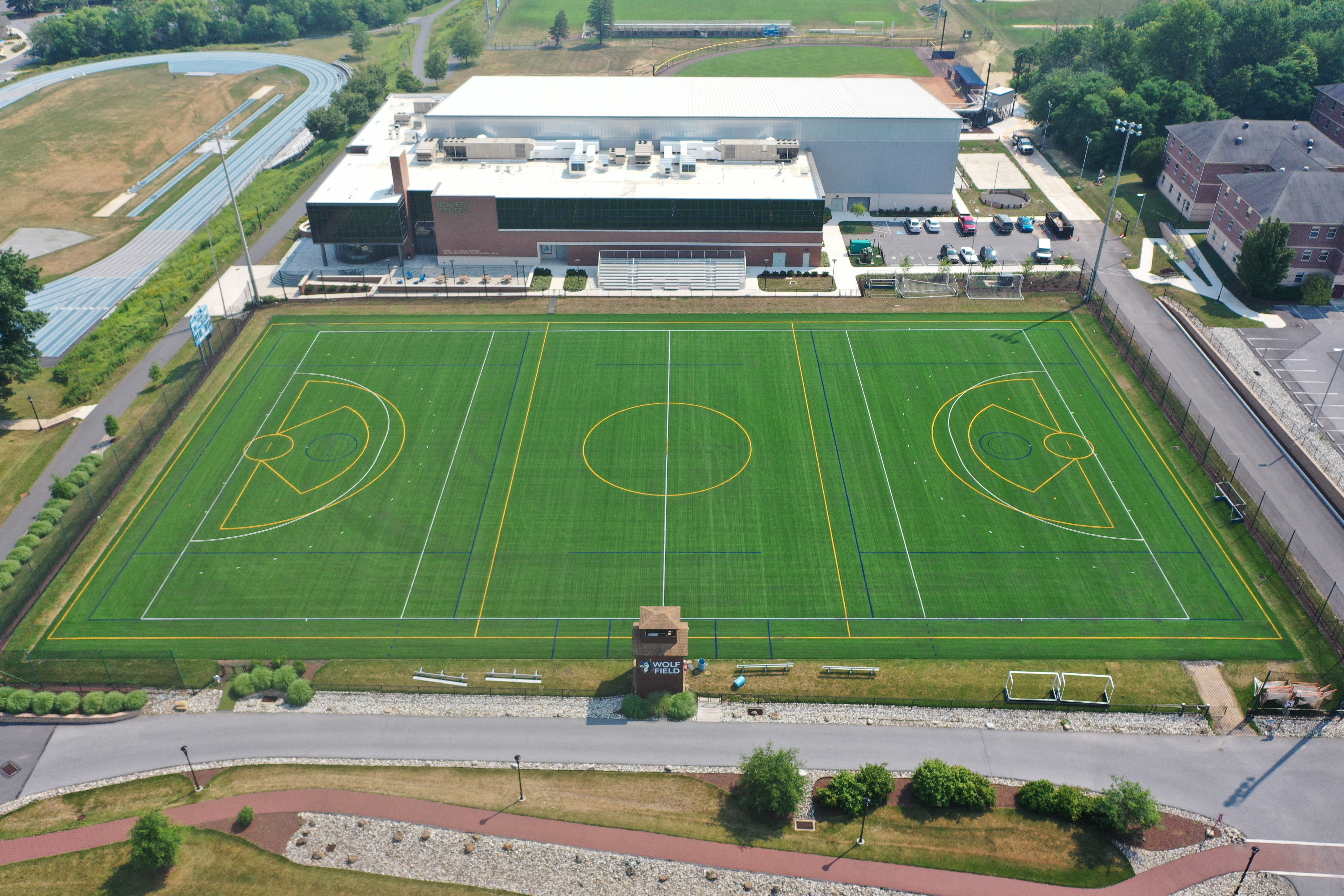
At Elizabethtown College, Keystone reclaimed and recycled the existing infill and removed the old turf. Installation of new dual-fiber synthetic turf with a thatch zone completed the field replacement.
Project Details
- Reclaiming and recycling of existing infill.
- Removal of the existing turf.
- Installation of replacement dual-fiber synthetic turf with a thatch zone.
Materials & Systems
- Dual-fiber synthetic turf with a thatch zone.
Design Elements
- Sportslines for soccer, field hockey, and lacrosse
FAQs
What is the best time to replace your artificial turf field? Replacement should be considered when a field’s condition no longer supports the expected level of play and performance. Worn or splitting fibers, separation at seams, and changes in surface firmness are among the conditions that warrant evaluation. Age alone does not describe the whole picture because use, weather exposure, and maintenance affect deterioration. Keystone recommends assessing the field comprehensively to determine whether repairs remain appropriate or a replacement offers the better next step.
What are the benefits of recovering infill during turf replacement? Recovering infill separates a potentially reusable or recyclable material from the old turf during removal. Planning that recovery can reduce the material sent away with the discarded field and create options for its next use. Whether it can be reused depends on its condition and the requirements of the receiving system. Recycling the recovered infill and reinstalling it are different outcomes, so the recovery plan should establish which route is appropriate.