
Cape Henlopen High School Auxiliary Turf Field Replacement | Lewes, DE
Cape Henlopen High School Auxiliary Turf Field Replacement | Lewes, DE
Location: Lewes, DE
Client: Cape Henlopen School District
Facility: Cape Henlopen High School Auxiliary Field
Project Type: Auxiliary Turf Field Replacement
Surface: Synthetic Turf
Scope: Existing Turf Removal, E-Layer Work, Shock Pad Installation, Replacement Turf Installation
Turf System: Synthetic Turf with a Shock Pad System
Project Gallery
Project Summary
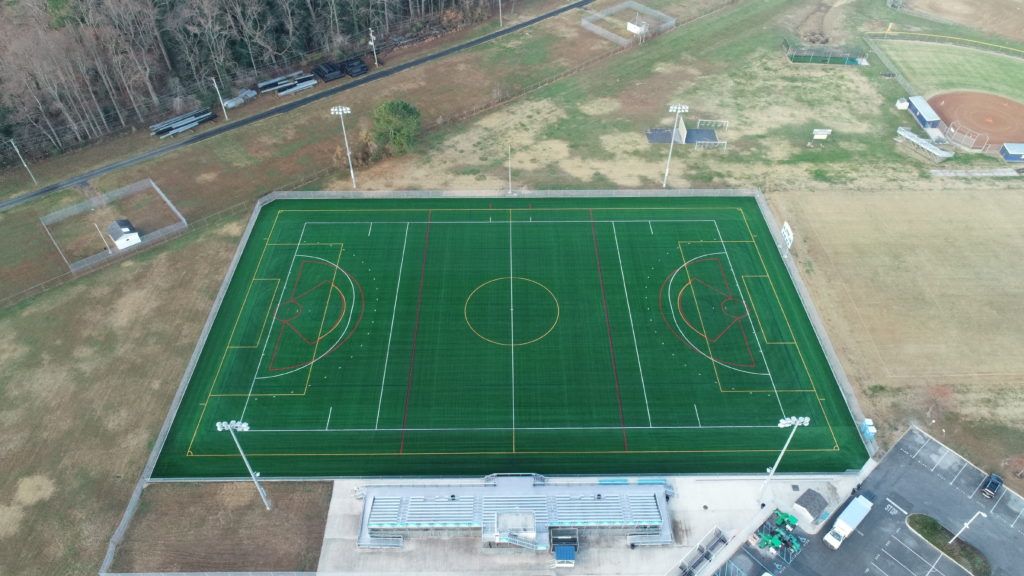
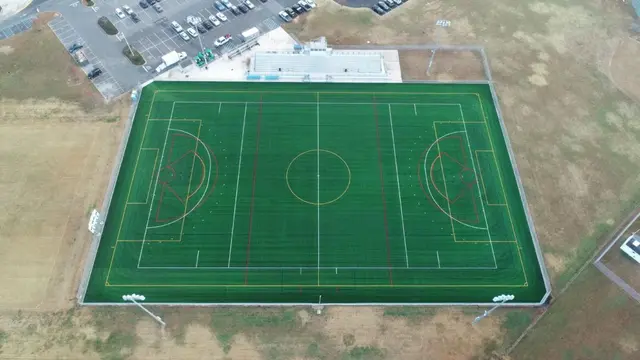
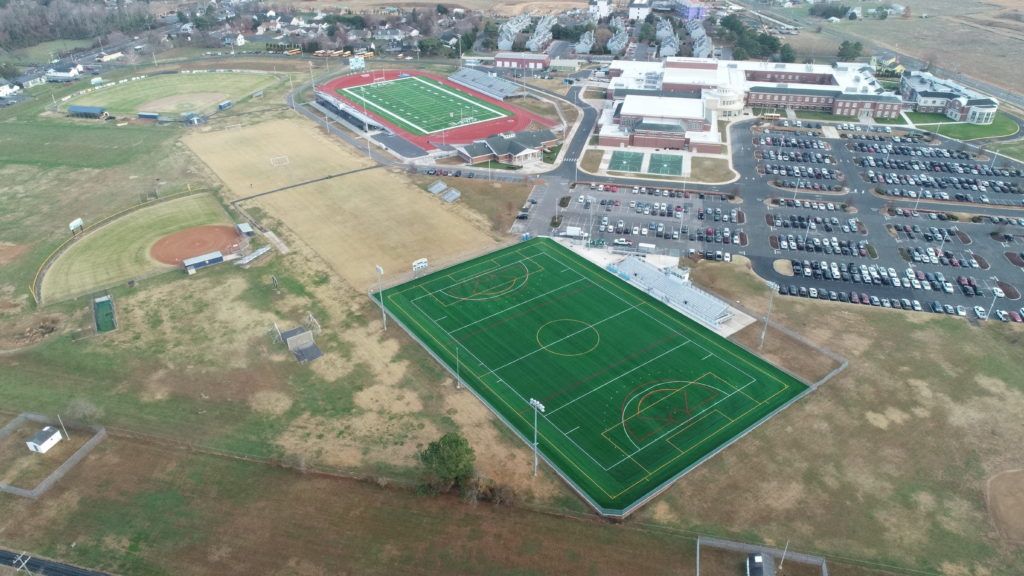
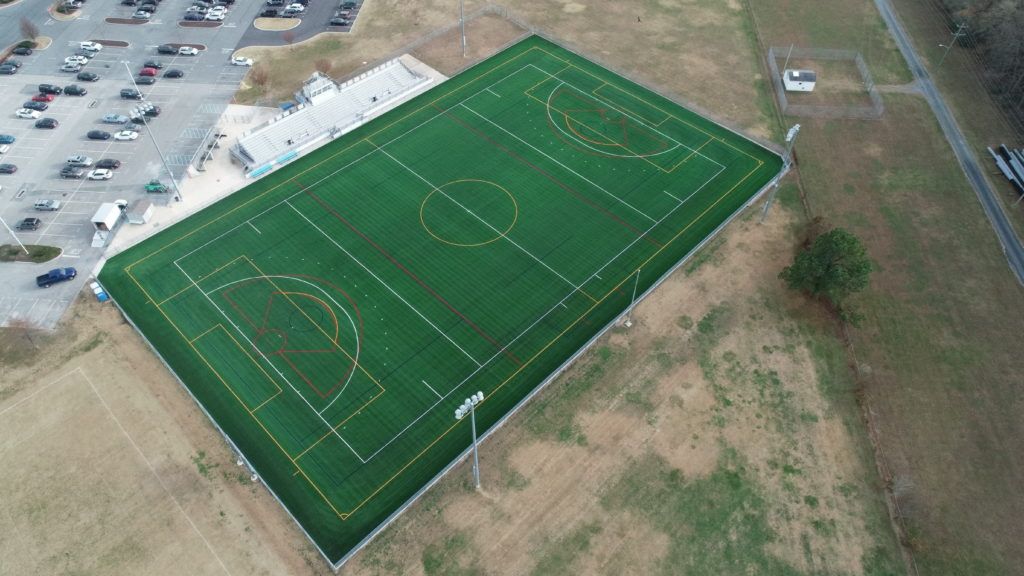
Keystone Sports Construction recently completed auxiliary turf field replacement at Cape Henlopen High School in Lewes, Delaware.
The Client
Cape Henlopen High School is part of a district extending from the Indian River Inlet to just south of Milford. The district brings together Delaware coastal communities and operates elementary, middle, and high schools across that region.
The Challenge
This auxiliary field was Keystone’s second field replacement for the district within a two-year period. The work extended below the turf carpet to the existing e-layer and a new shock pad system.
Construction Process
The project involved reclaiming and recycling the existing infill, work on the existing e-layer, installation of a new shock pad system, and replacement of the synthetic turf. The new pad was installed beneath the replacement turf surface.
Project Details
- Reclaiming and recycling of existing infill.
- Removal of the existing turf surface.
- Work on the existing e-layer.
- Installation of a new shock pad system.
- Installation of replacement synthetic turf.
Materials & Systems
- Synthetic turf system.
- Shock pad system.
Design Elements
- Sports lines for soccer, field hockey, and lacrosse
FAQs
What does a shock pad contribute to a synthetic turf field? Installed below the turf carpet, a shock pad adds a resilient layer that contributes to impact absorption. Its performance must be considered together with the turf and infill, because athletes interact with the complete field assembly. Some pad systems also have drainage functions, although that feature should not be assumed for every product. Selecting a pad therefore involves reviewing how it works with the other specified materials and the performance requirements of the field.
What happens before replacement turf is installed? Removing the existing turf gives the installer access to the layers underneath it. Those conditions help determine the preparation needed before the replacement system goes down, from localized repair to more substantial foundation work where warranted. The removal plan and the new system’s requirements should be considered together. Evaluating the exposed surface at this stage helps establish a suitable starting point for installation without assuming that every replacement requires the same repairs.