
Fall is Ideal for Running Track Installation & Here’s Why
Read More
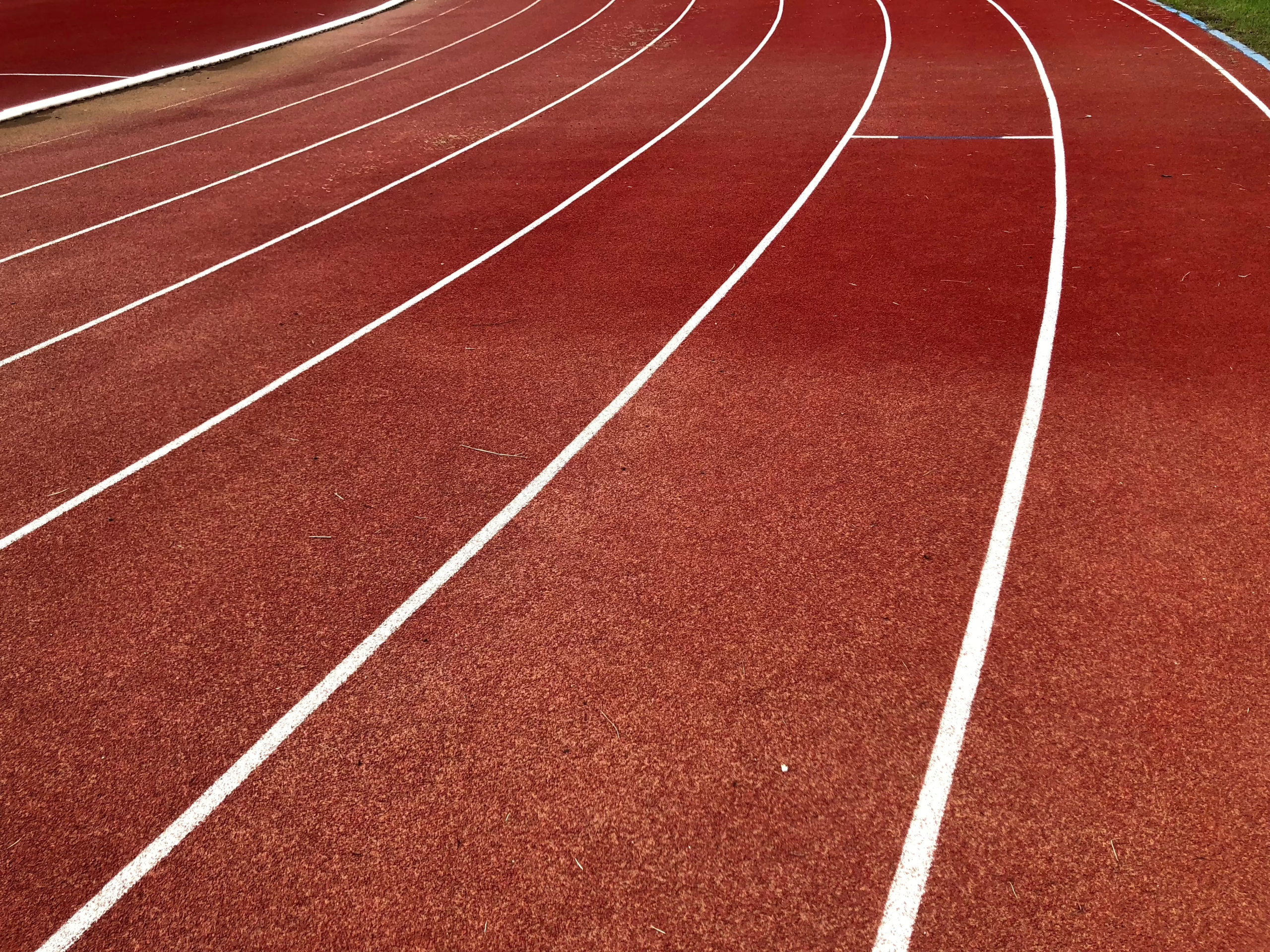
The athletic track is more than just a surface; it’s the foundation upon which college athletes build their skills, break records, and forge their competitive spirit. For college athletic programs, the choice of track flooring is a critical, long-term decision that impacts performance, safety, durability, and the overall return on investment (ROI).
At Keystone Sports Construction, we understand that selecting the right material involves a deep dive into engineering, athletic needs, and budgetary realities. This guide explores the key factors colleges must consider when investing in new or refurbished track surfacing. Call us the next time you need a track flooring installation in VA.
The fundamental role of track flooring is to provide an optimal interaction with the athlete’s foot. This relationship is governed by the principles of biomechanics and material science.
A high-quality track surface acts like a carefully tuned spring. When an athlete’s foot strikes the track, the material must absorb the impact energy (known as force reduction) to protect joints, muscles, and ligaments, minimizing the risk of impact-related injuries. At the same time, the surface must quickly return a portion of that stored energy back to the athlete (known as energy return).
The ideal track flooring balances these two competing demands, often achieved through advanced, multi-layered systems that combine cushioning with stiffness.
Track and field events require specialized footwear with spikes. The flooring must be tough enough to withstand repeated puncturing and shearing forces without degrading its structural integrity. More importantly, the surface must provide consistent, reliable traction in all weather conditions.
While performance is key, athlete safety is paramount and well planned for track flooring construction in NJ. The right track flooring can significantly mitigate both acute (sudden) and chronic (overuse) injuries.
The most common surfaces, like polyurethane and latex-bound aggregates, are chosen specifically for their superior shock absorption. These materials cushion the landing, reducing stress on the runner’s musculoskeletal system.
A key safety feature is the seamless nature of modern poured-in-place tracks. Unlike old asphalt or concrete tracks with expansion joints and cracks, a seamless synthetic surface eliminates tripping hazards.
A college track is a substantial investment, requiring a surface that can withstand not only constant athletic use but also harsh environmental conditions. Weather Resistance and UV Stability
Tracks are exposed to a relentless cycle of UV radiation, temperature extremes, rain, snow, and ice.
The projected lifespan of a high-quality synthetic track is typically 10 to 15 years before a major resurfacing is required. Proper, routine maintenance is essential to achieving this lifespan.
The track surface is also a major visual component of a college’s athletic complex and plays a role in recruitment.
Synthetic tracks offer a wide range of color choices, allowing institutions to align the track with their school colors and create a distinct, professional aesthetic that athletes and visitors immediately recognize.
Many college tracks must accommodate a variety of needs beyond simple running, including physical education classes, intramural sports, and community events. The flooring must be resilient enough to handle occasional non-spiked footwear and light utility vehicle traffic (for maintenance) without permanent damage.
Finally, colleges must consider the materials’ impact on the environment and adherence to local regulations.
Choosing the right track flooring is an intersection of athletic necessity, engineering excellence, and financial stewardship. By thoroughly evaluating performance characteristics, safety certifications, durability requirements, and lifecycle costs, college athletic directors can make an informed decision that will support the success and well-being of their athletes for a decade or more.
Keystone Sports Construction specializes in the design, installation, and maintenance of world-class collegiate track surfaces. We partner with your program to select and implement the surface that meets your exact competitive and budgetary needs.